Avian Sanctuary
March-April 2025
Duration: 4 weeks
Project Description:
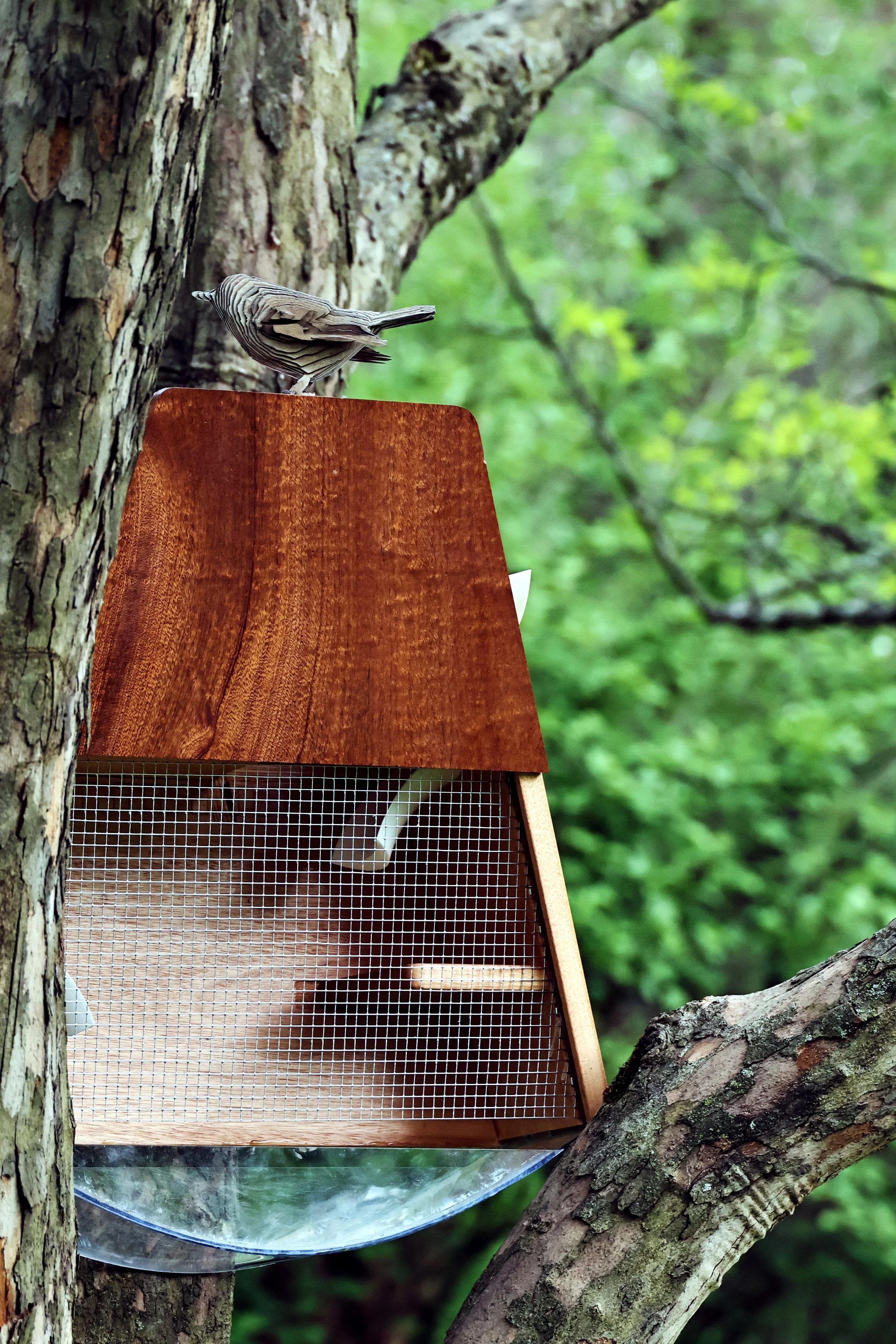
Design and construct a birdhouse that exceeds the typical needs of a chosen bird species. I chose the White-breasted nuthatch, a common North American bird known for its climbing ability and tendency to find shelter in preexisting tree cavities.
Components: 21
Wood species: Red grandis, maple, sapele
Materials: 7
Bird amenities: 5

RESEARCH
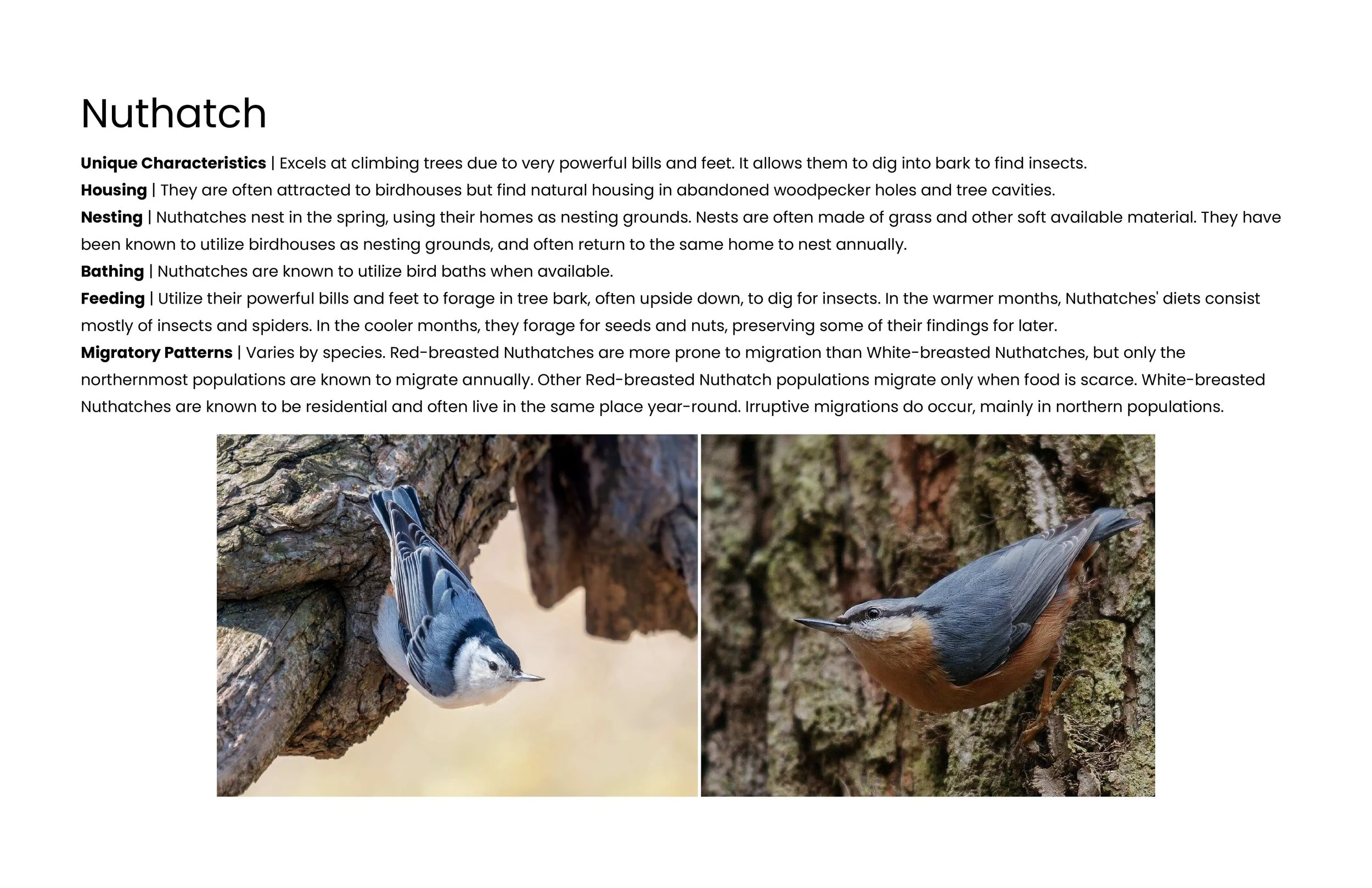
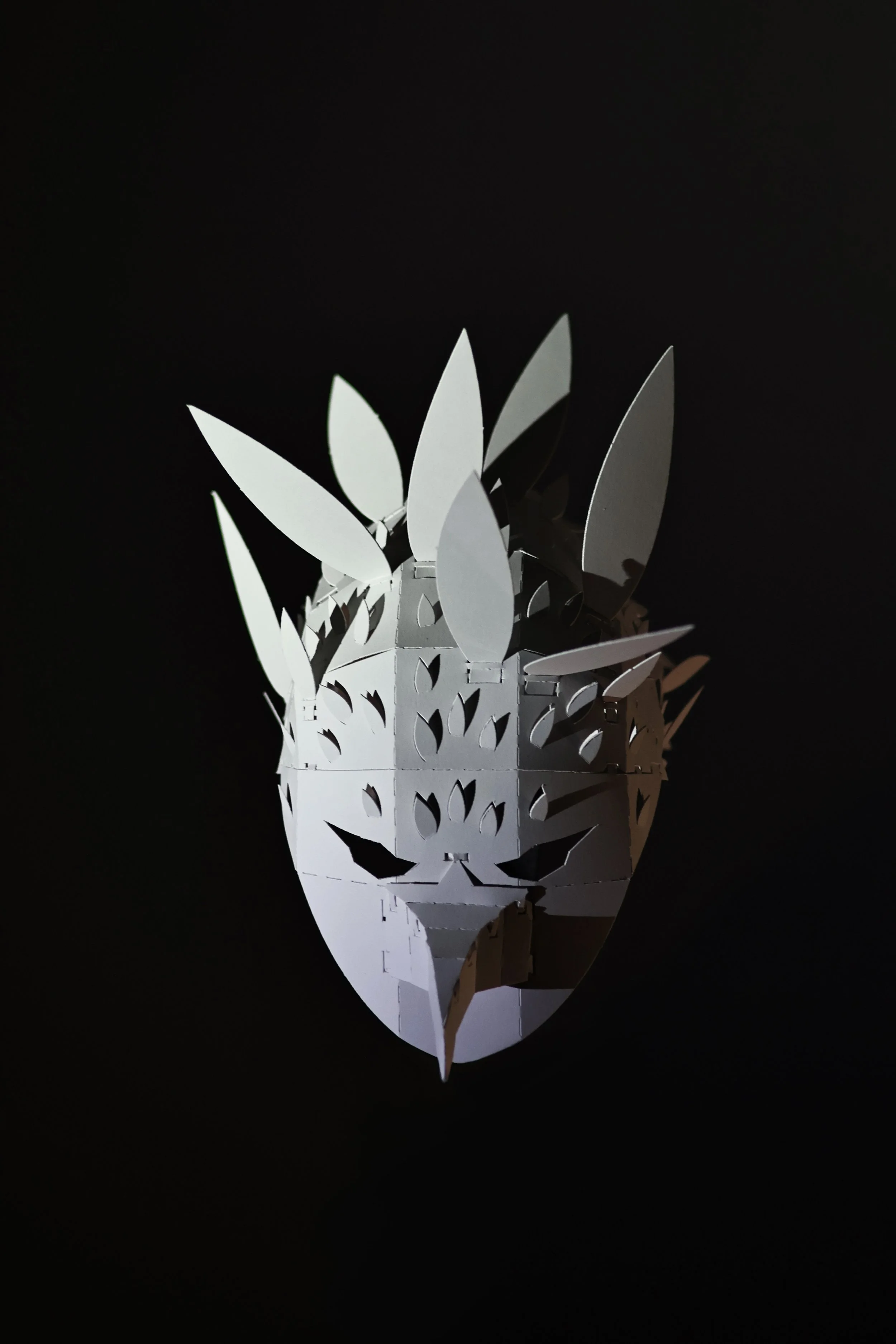
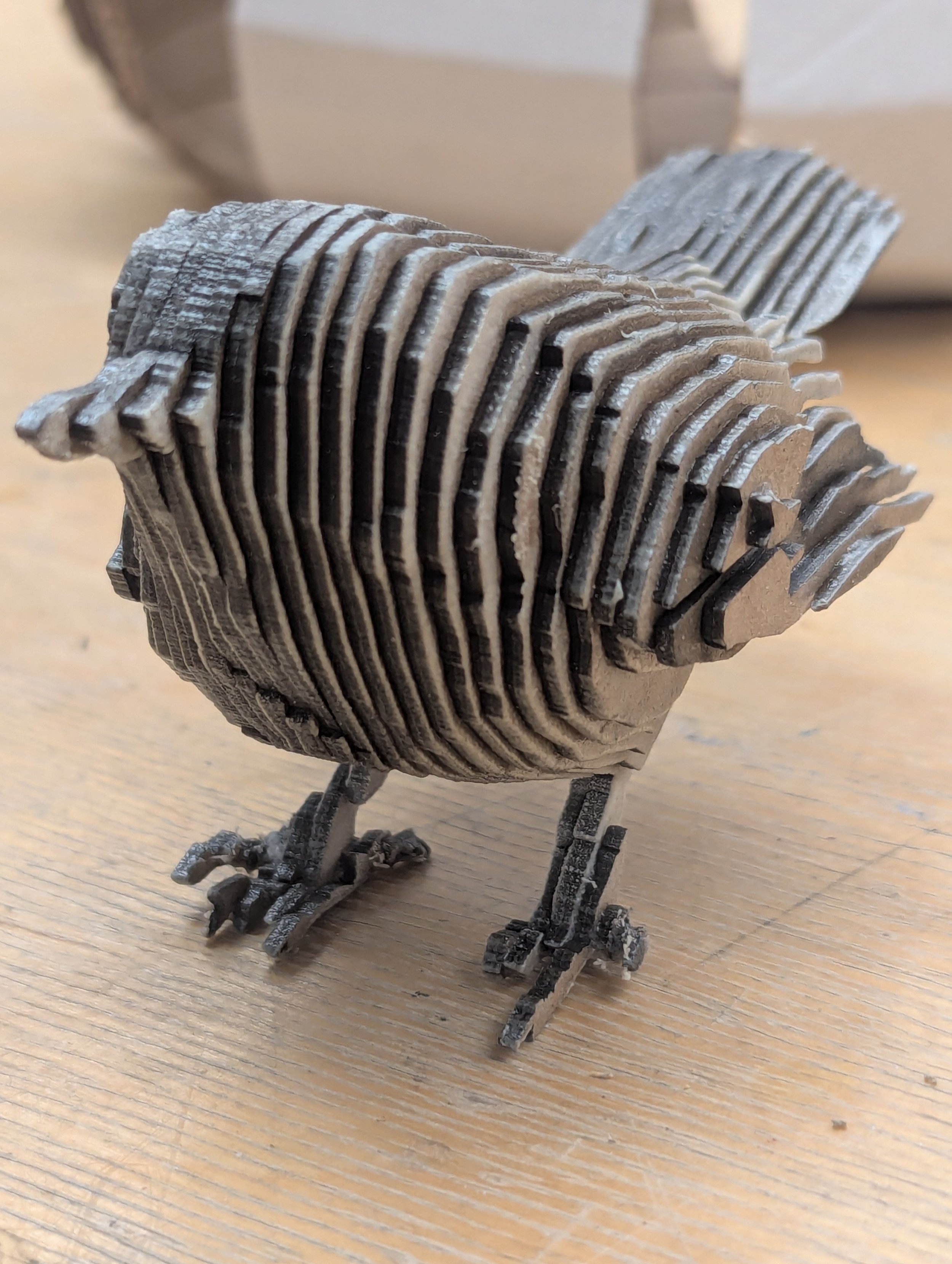
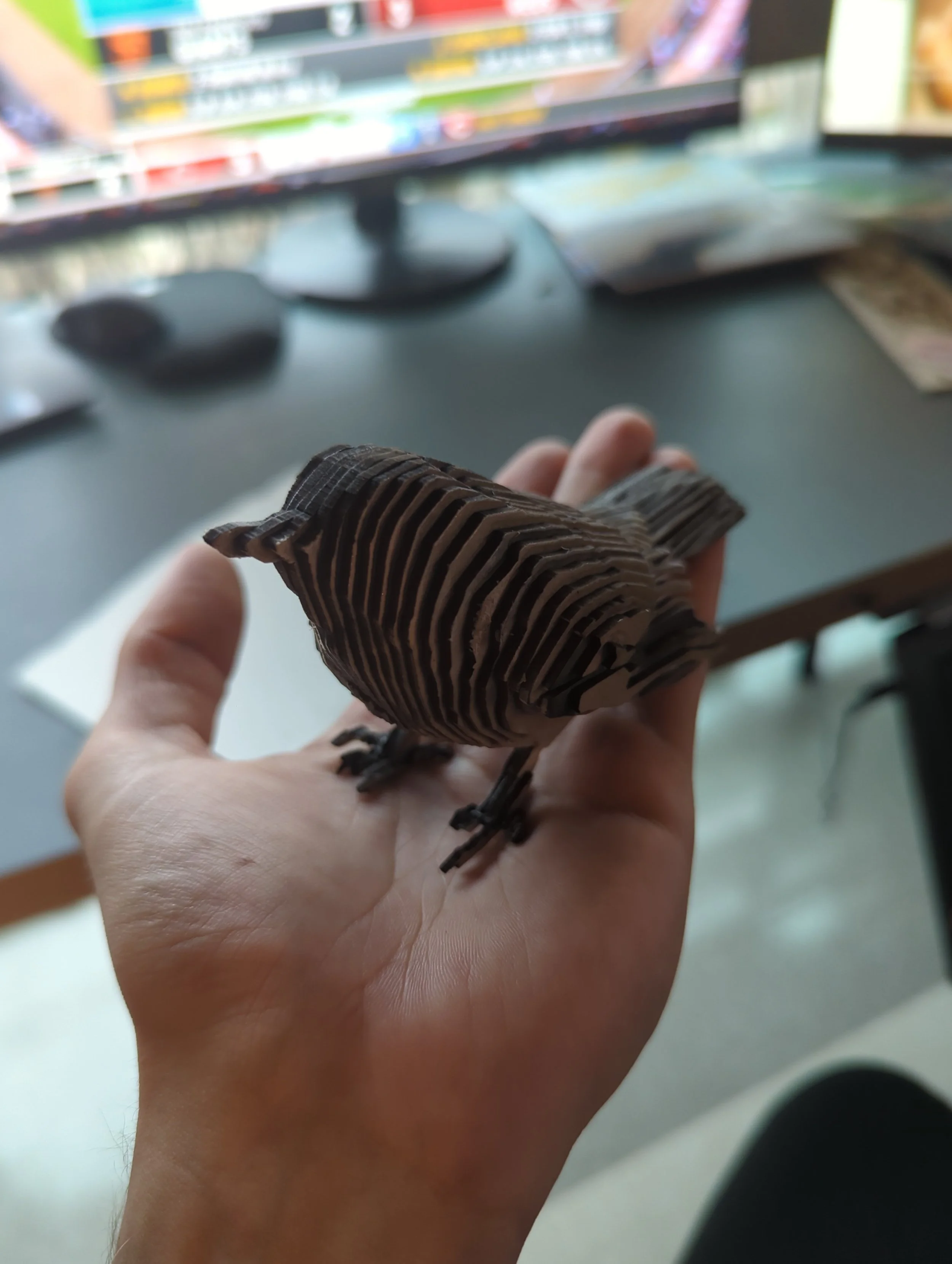
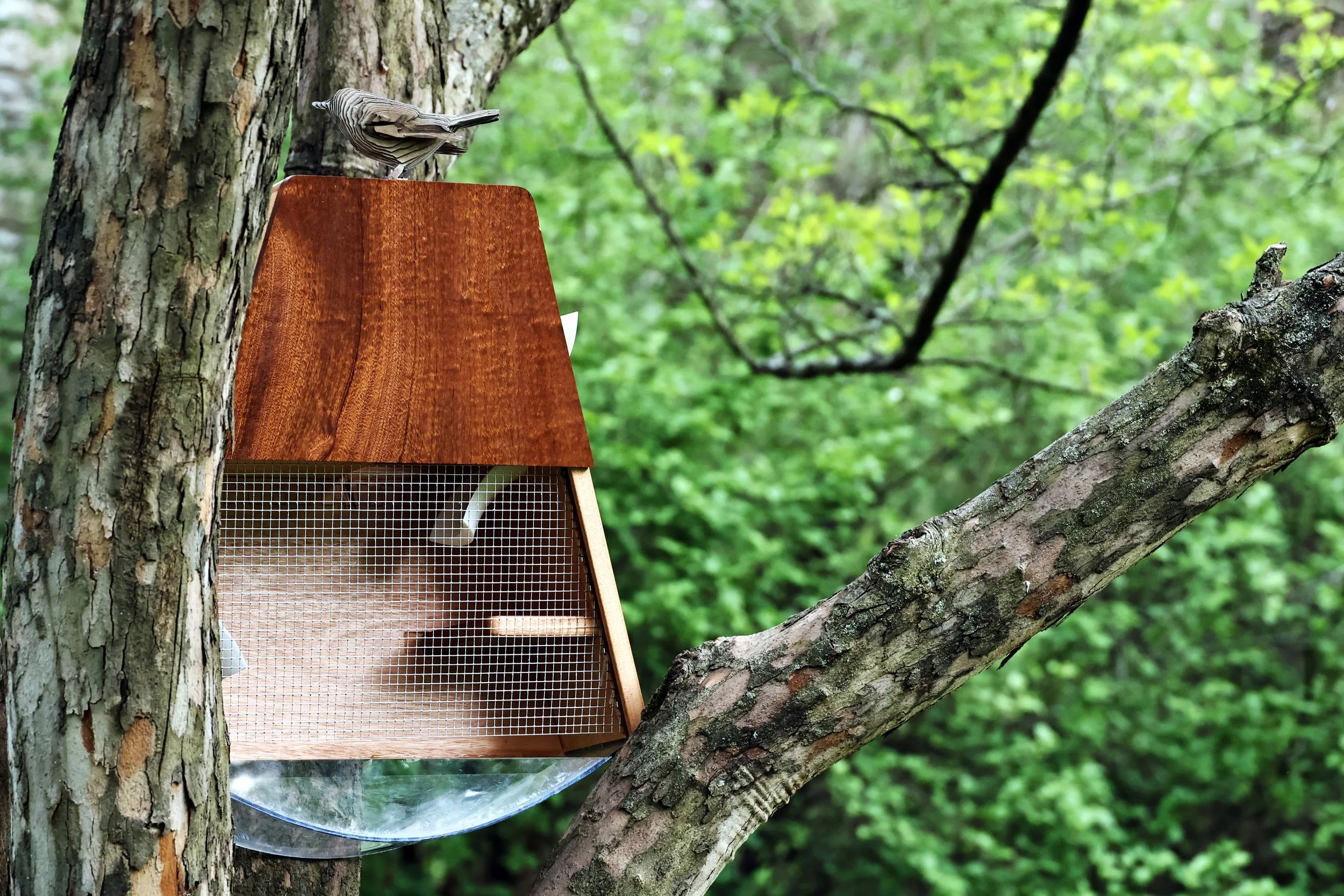
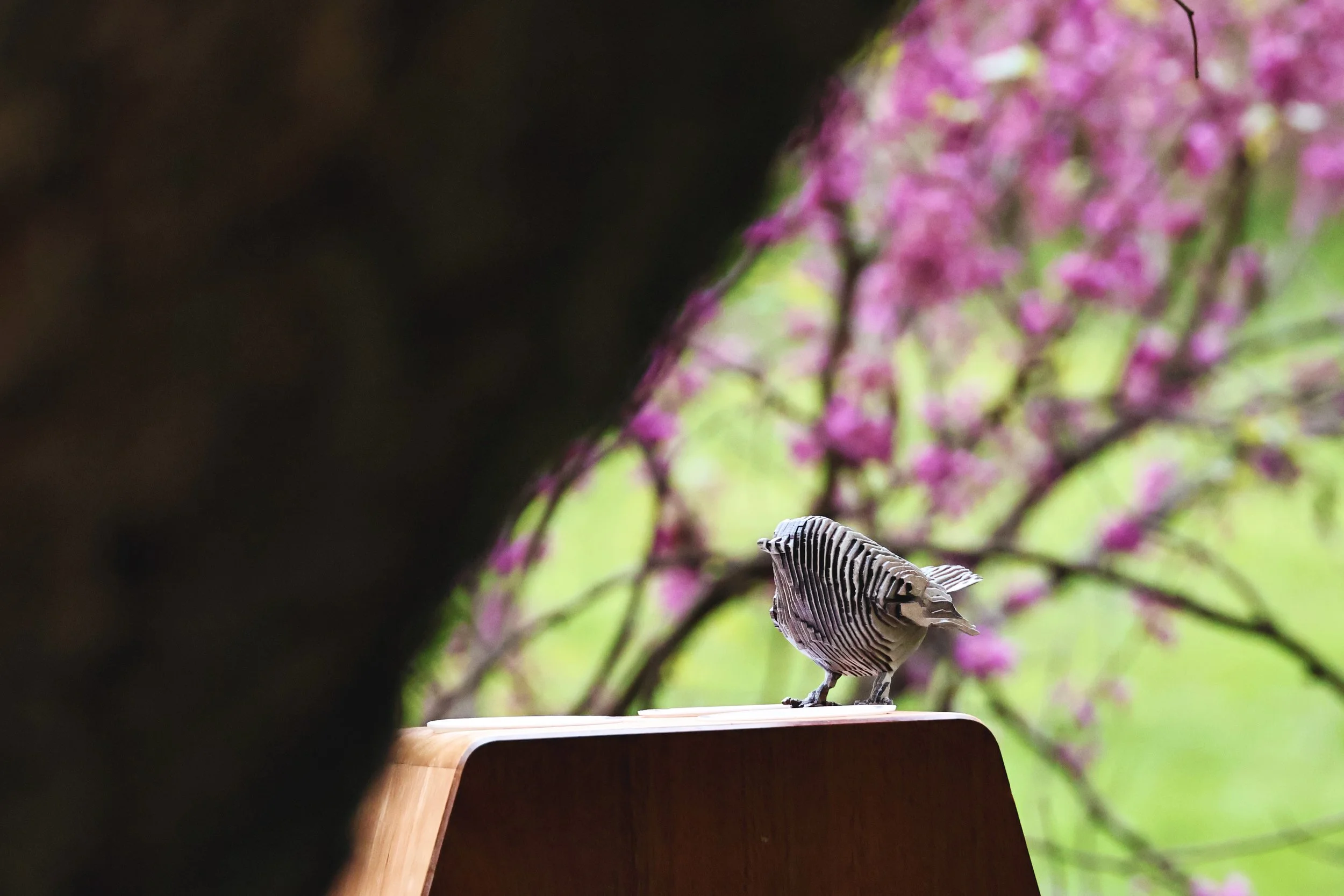
Nuthatch model made with 31 laser-cut particle board layers.
IDEATION
MODELS
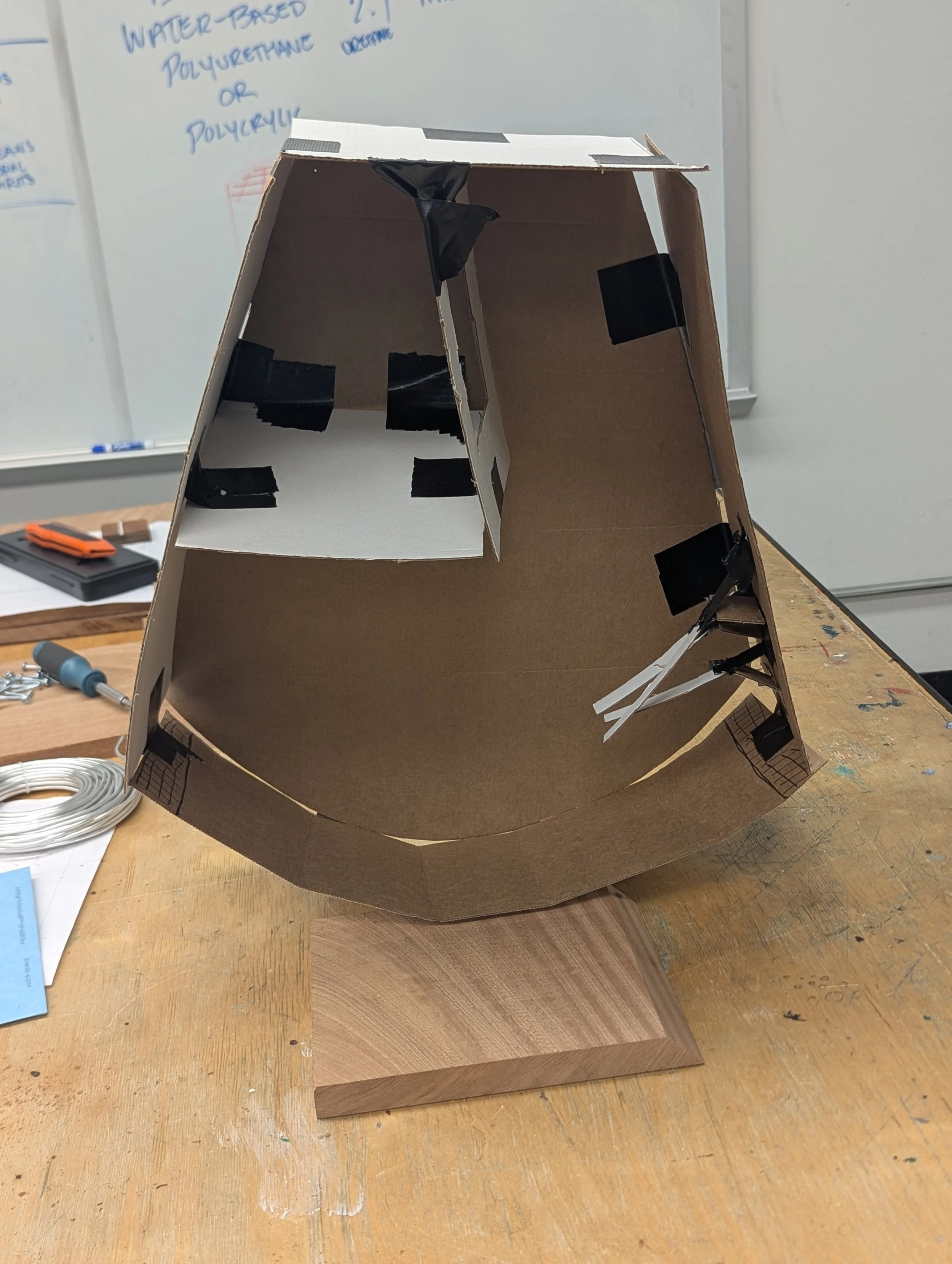
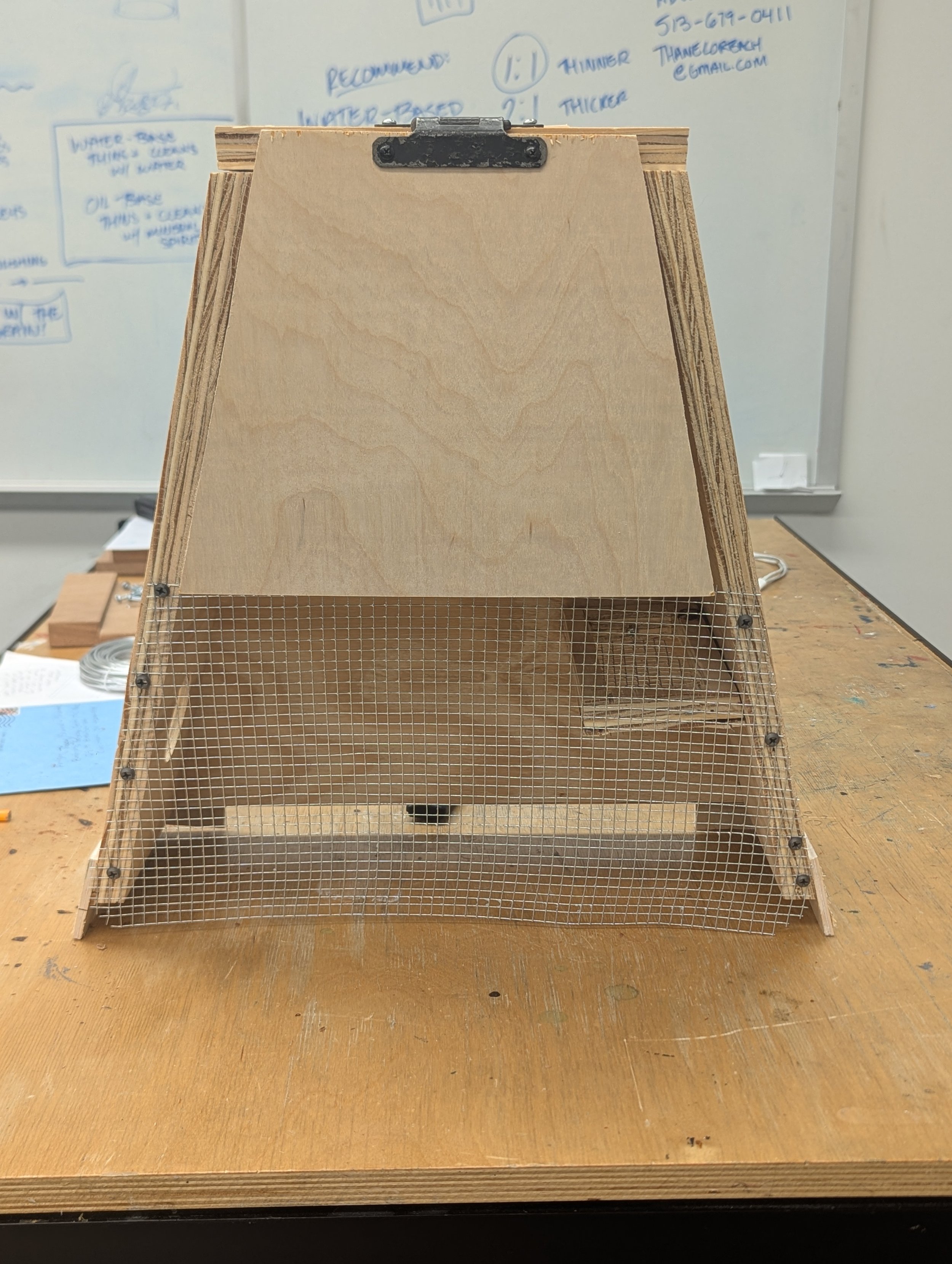
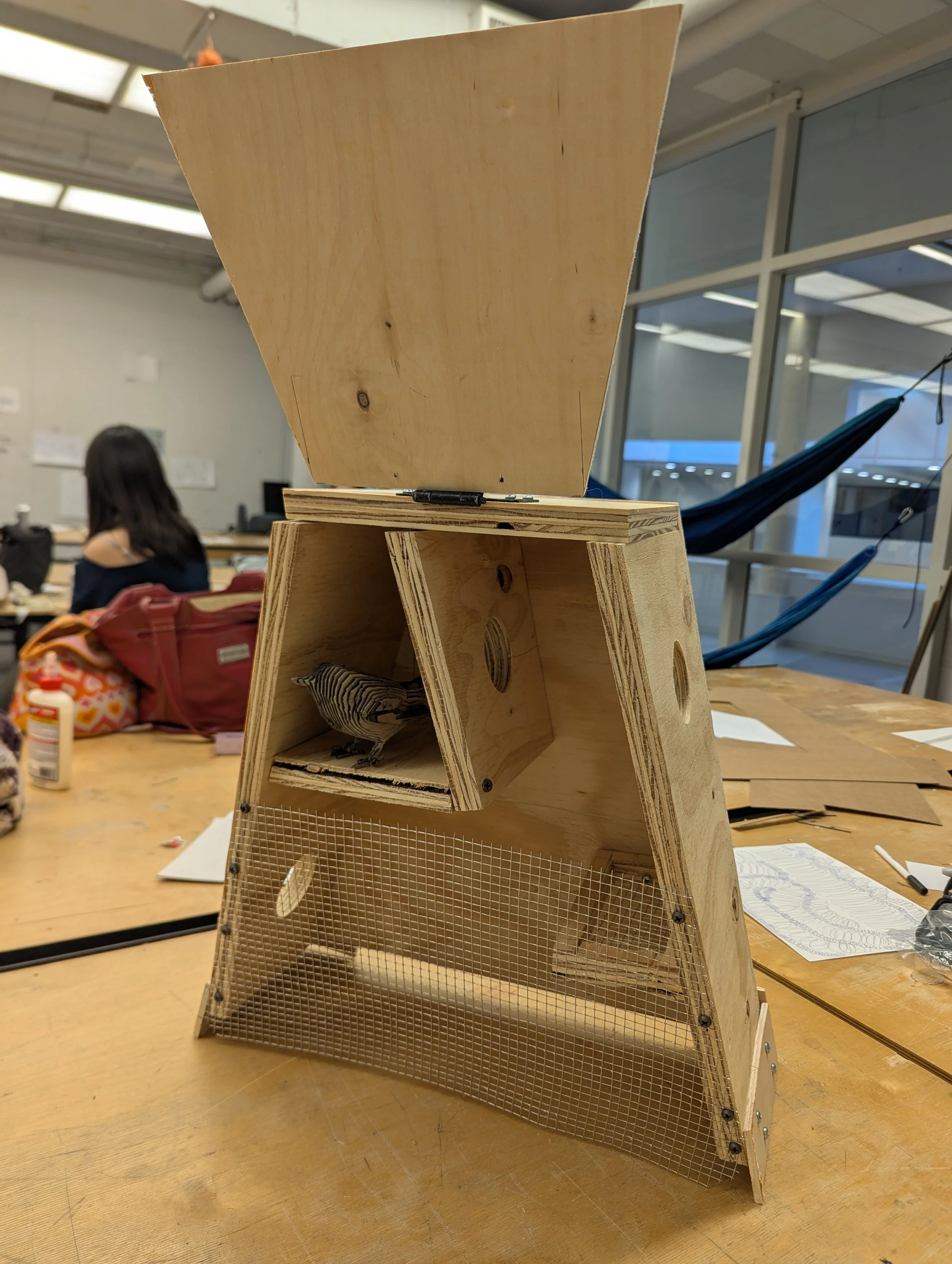
Left: low-fidelity cardboard model
Right: mid-fidelity plywood model; displays some features that remain consistent through final design, including: entrance placement, nesting area size, wire mesh cover, and wood cover shape

3D Models
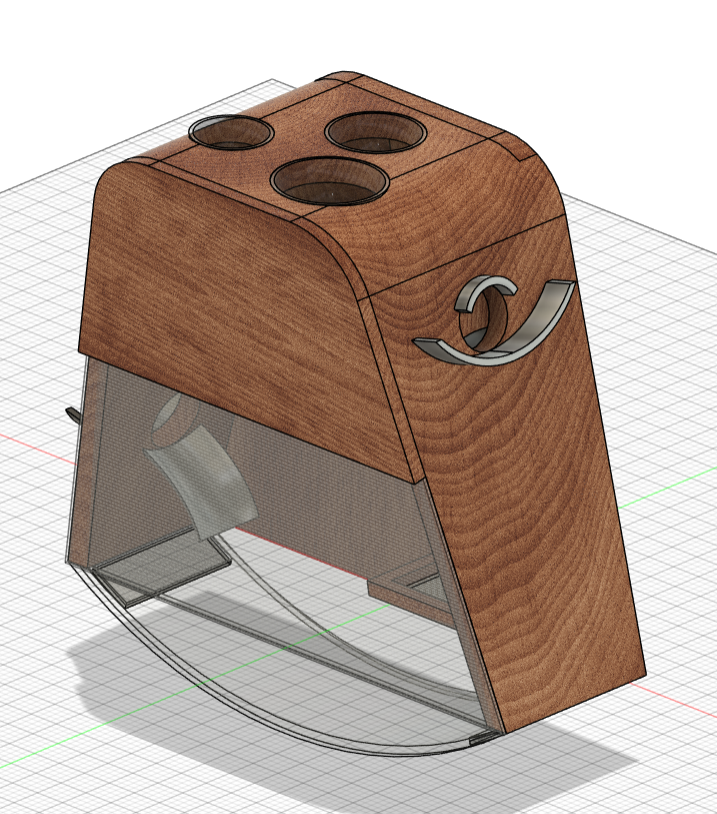
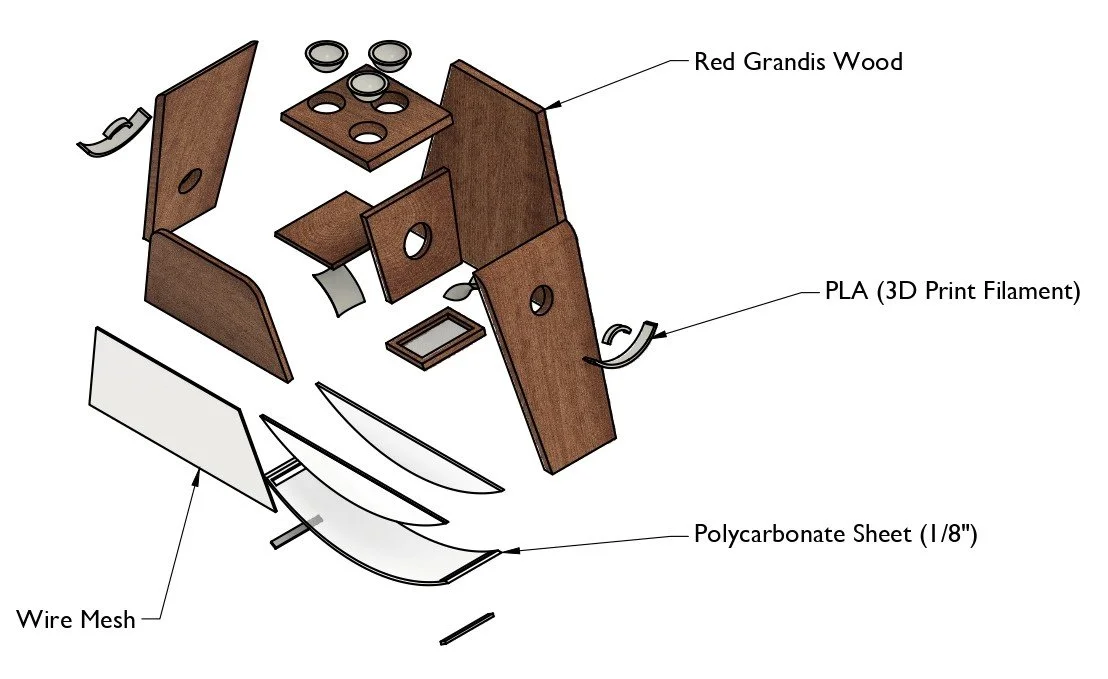
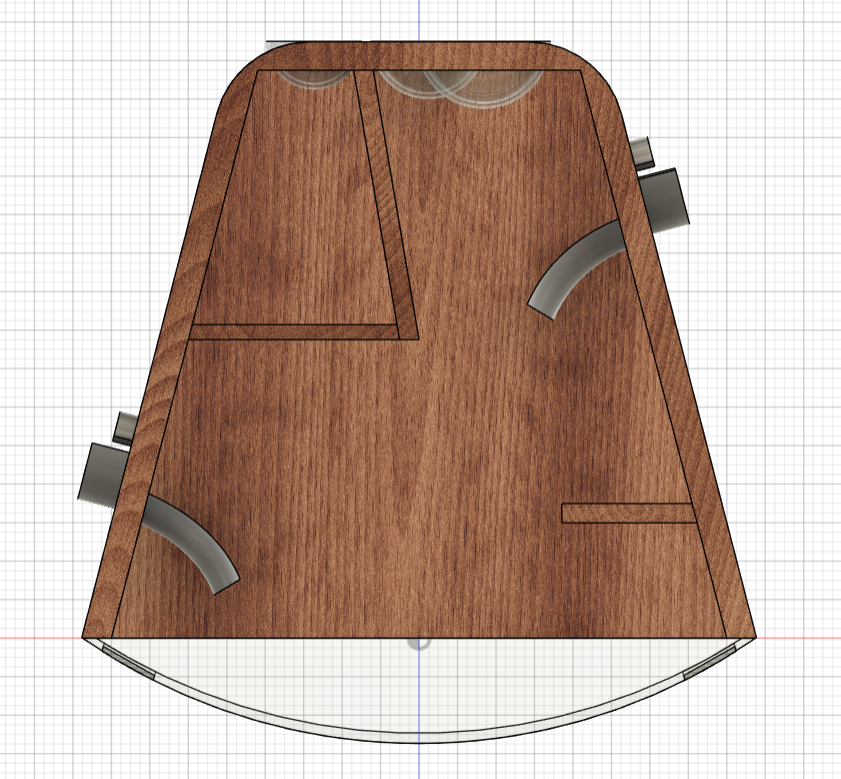
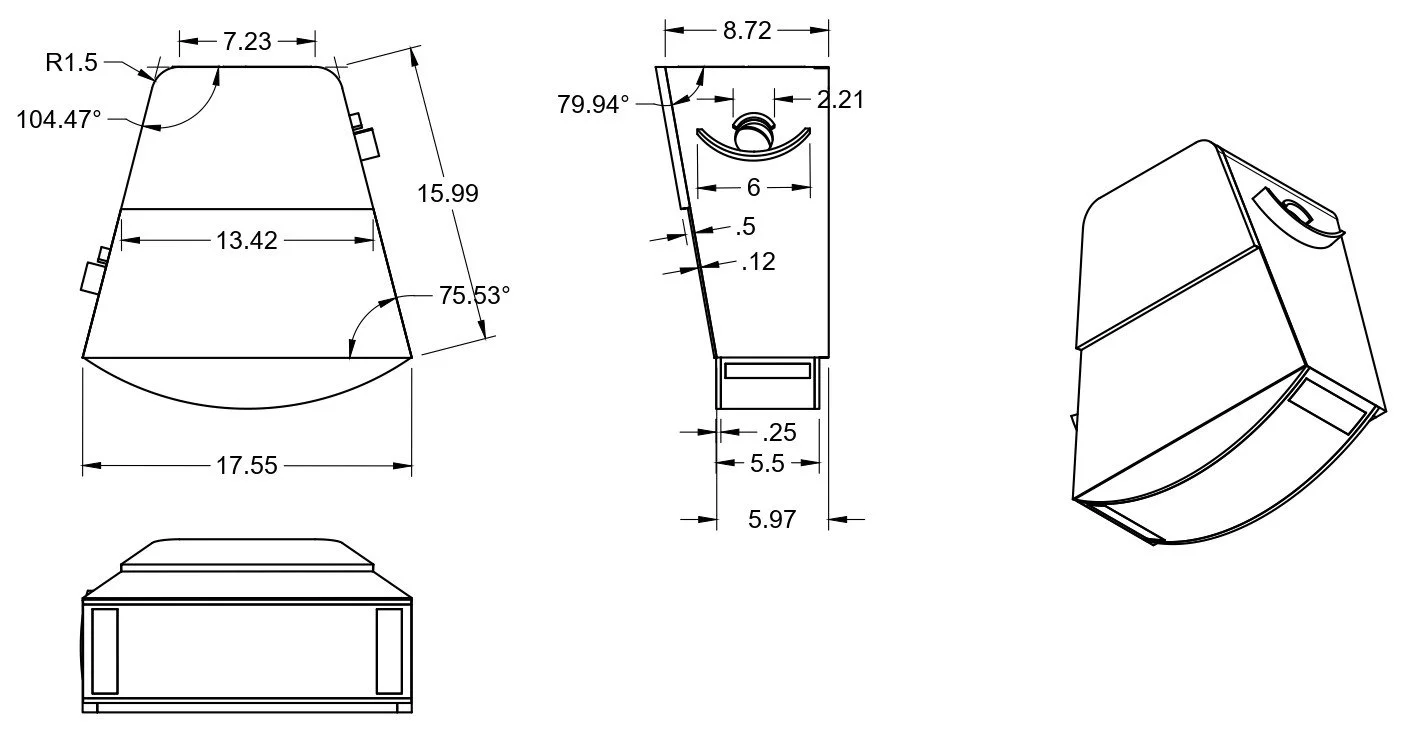
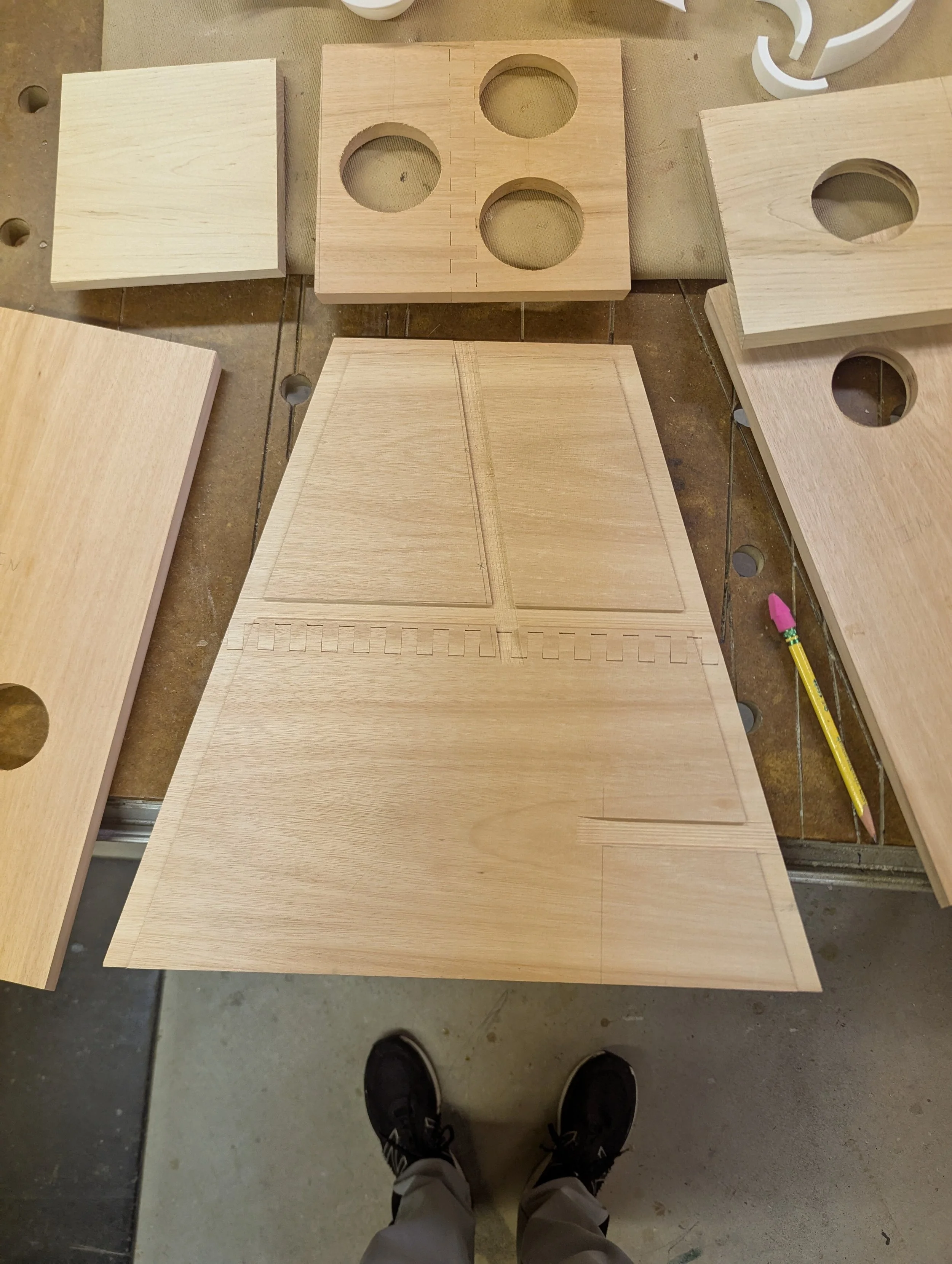
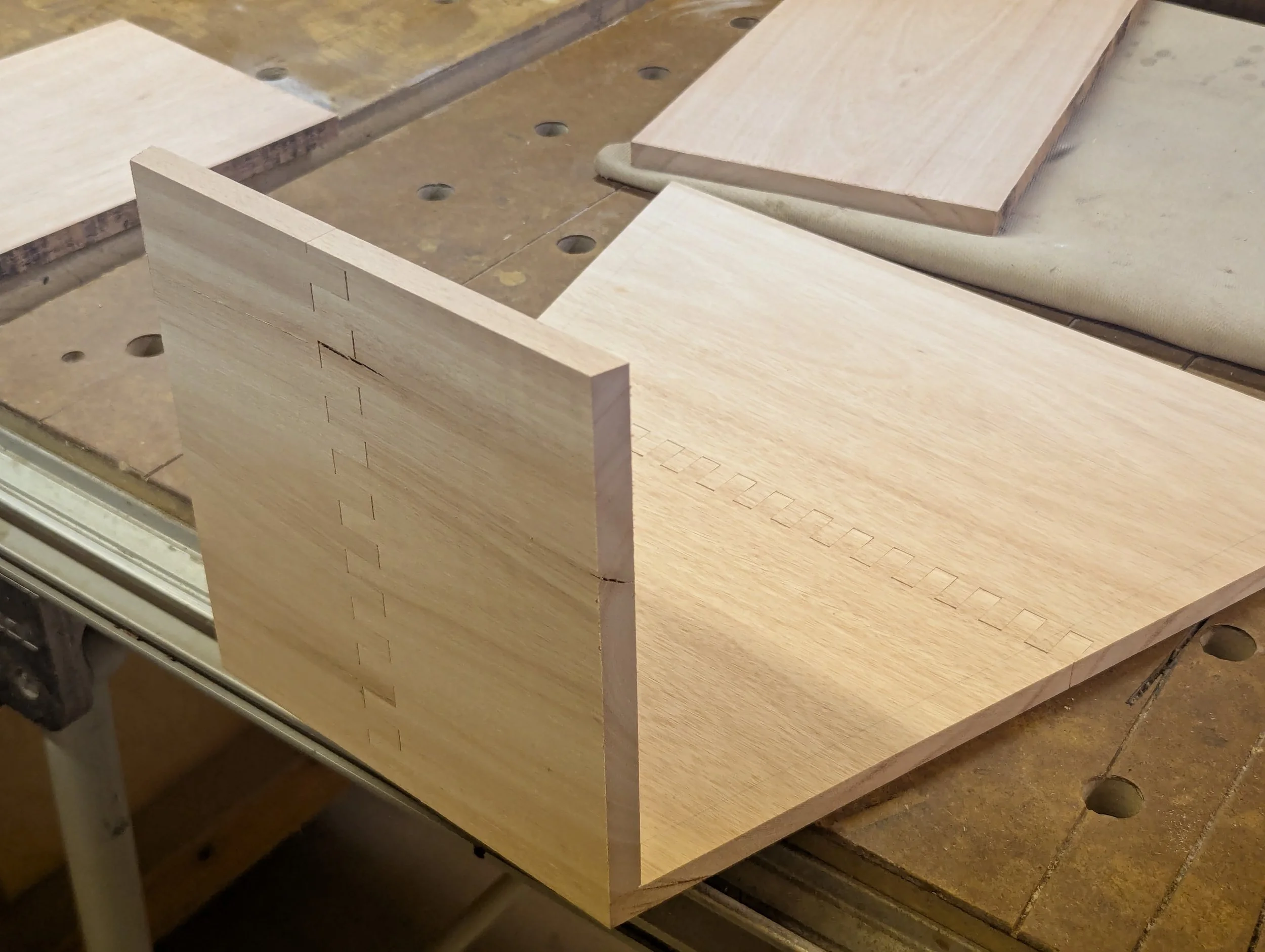
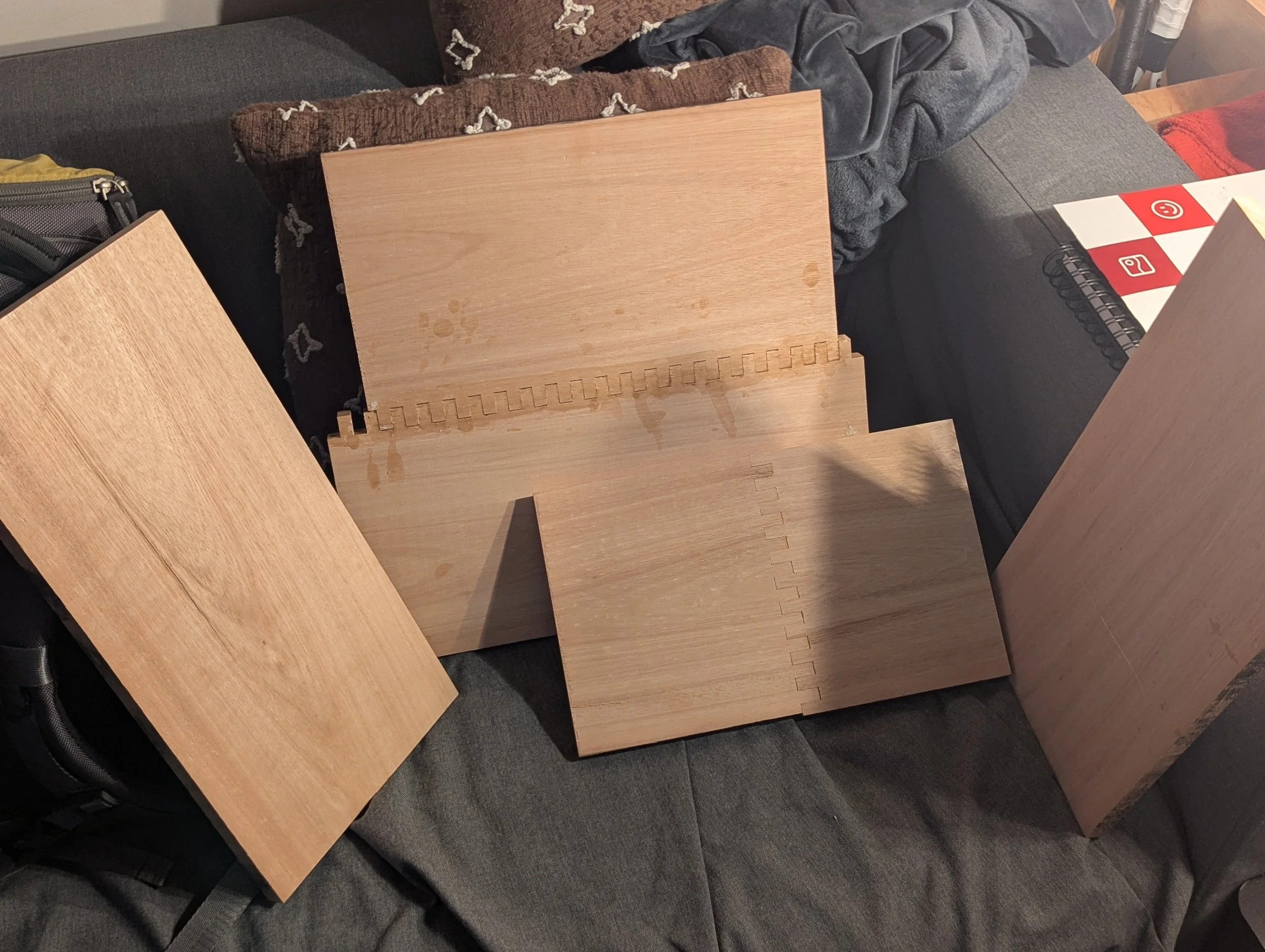
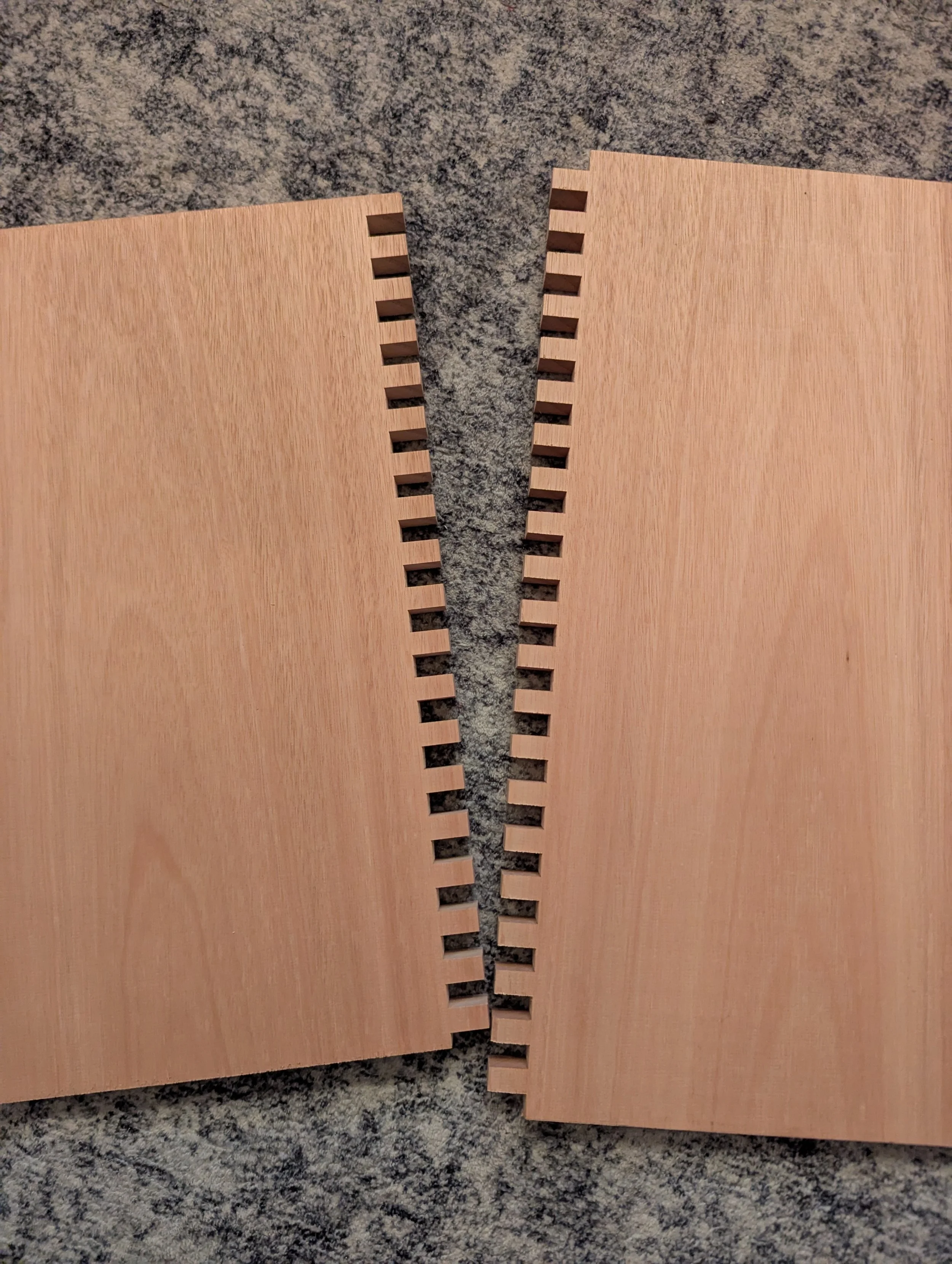
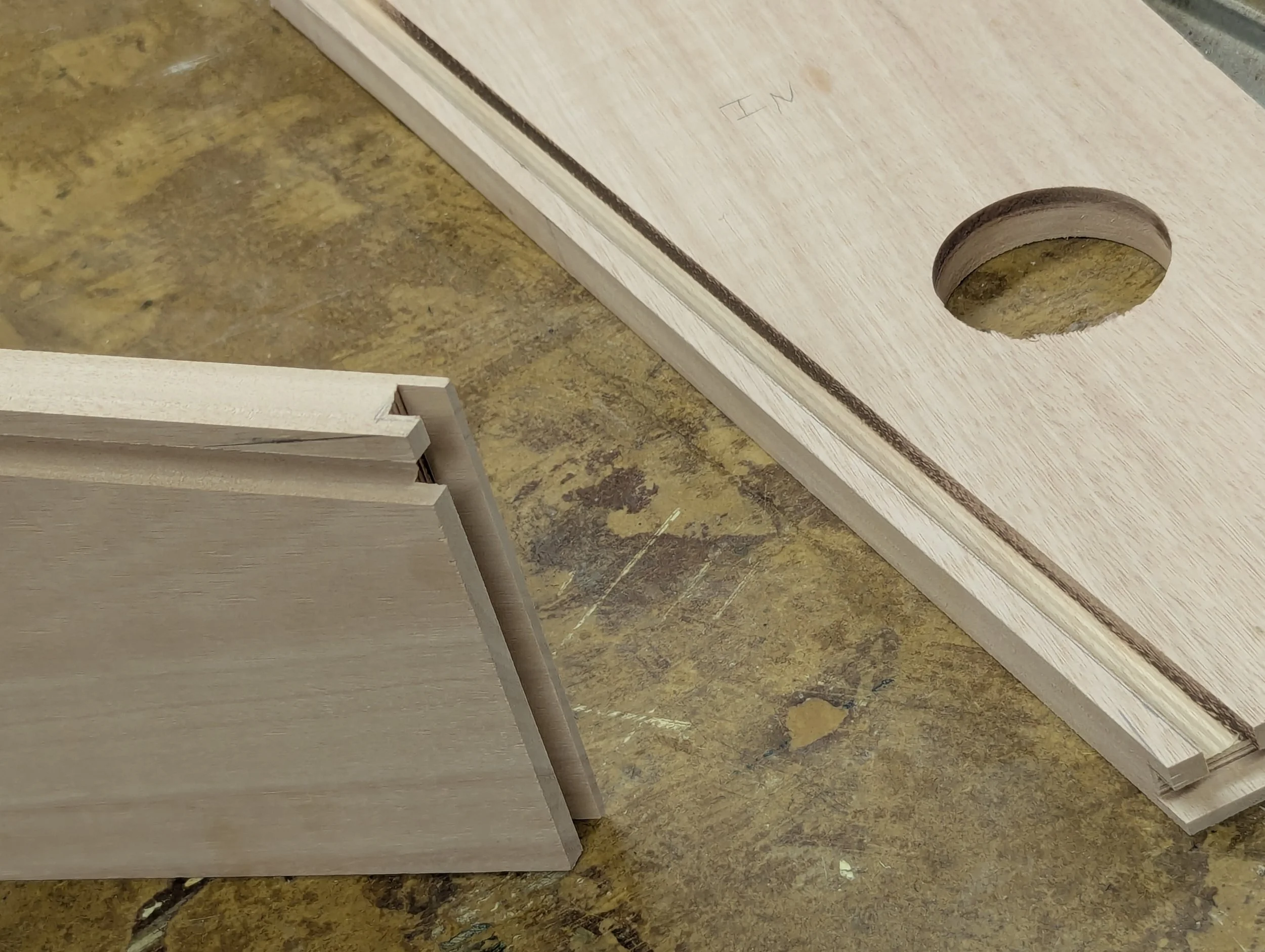
Aside from the box joints to create pieces with larger surface areas, I predominantly used dado joints and rabbet joints to assemble the frame.
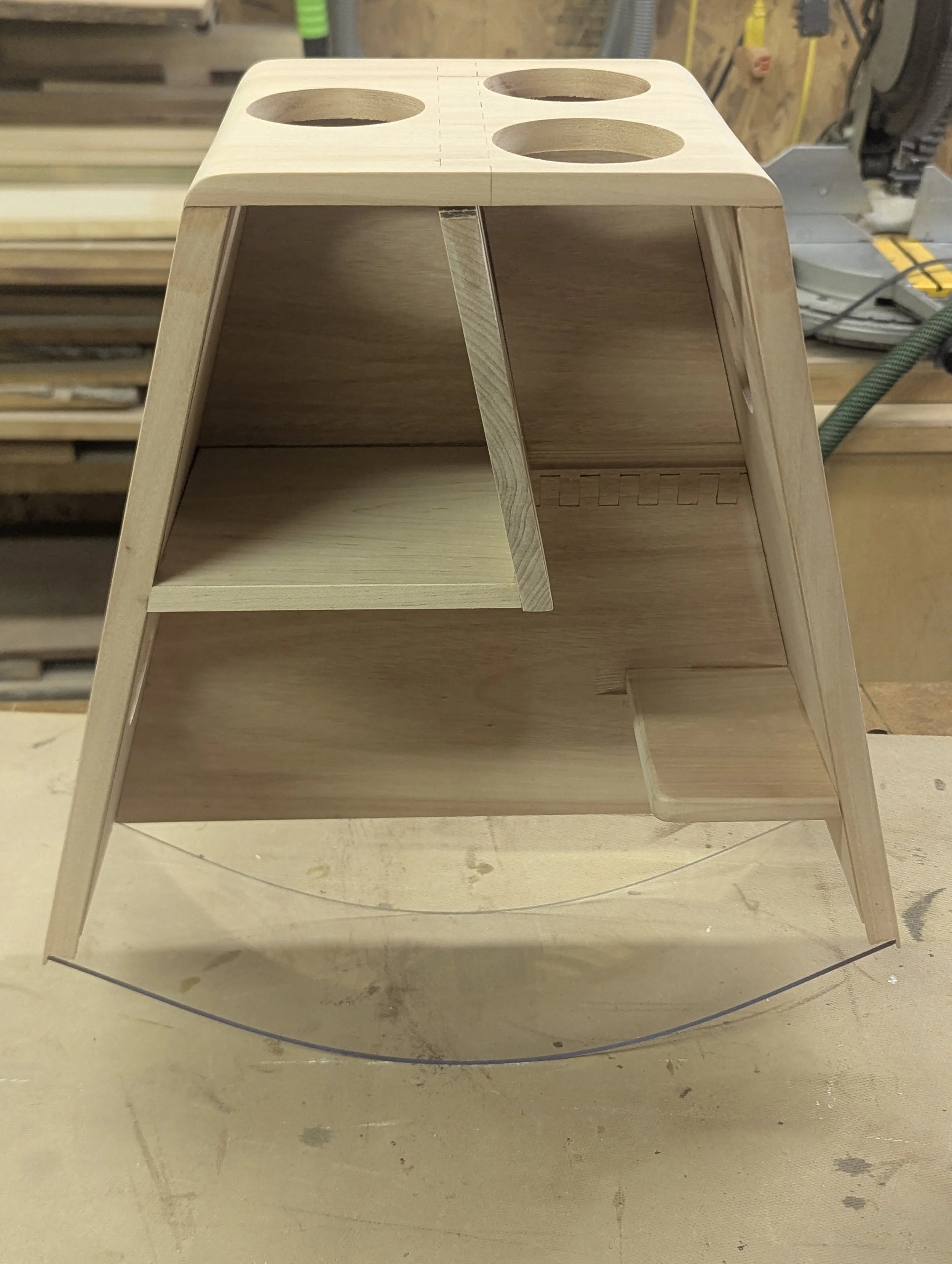
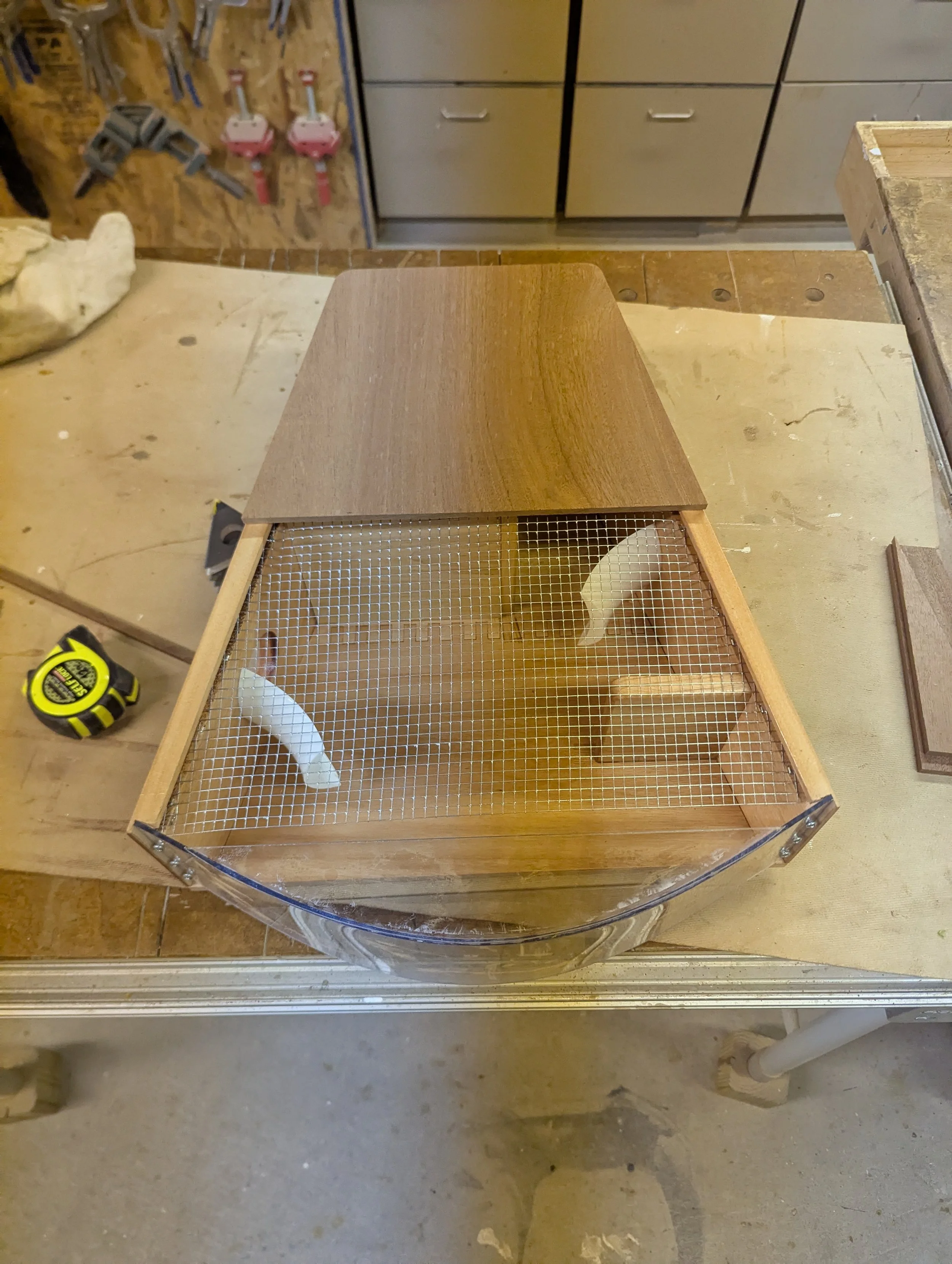
Addition of polycarbonate plate (rainwater pool base)
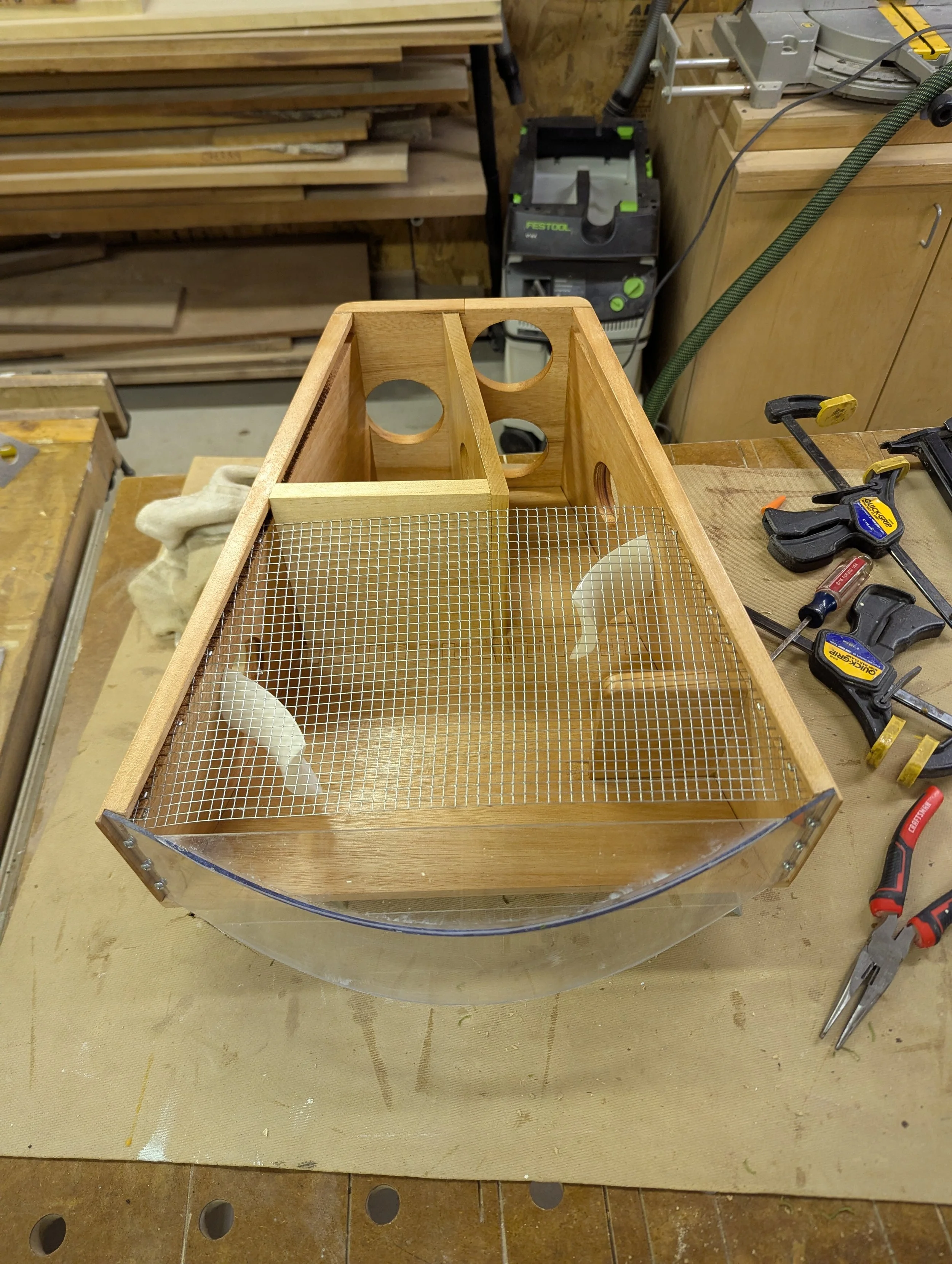
Addition of polycarbonate siding to pool & 3D-printed slides to move water into it
FINALS
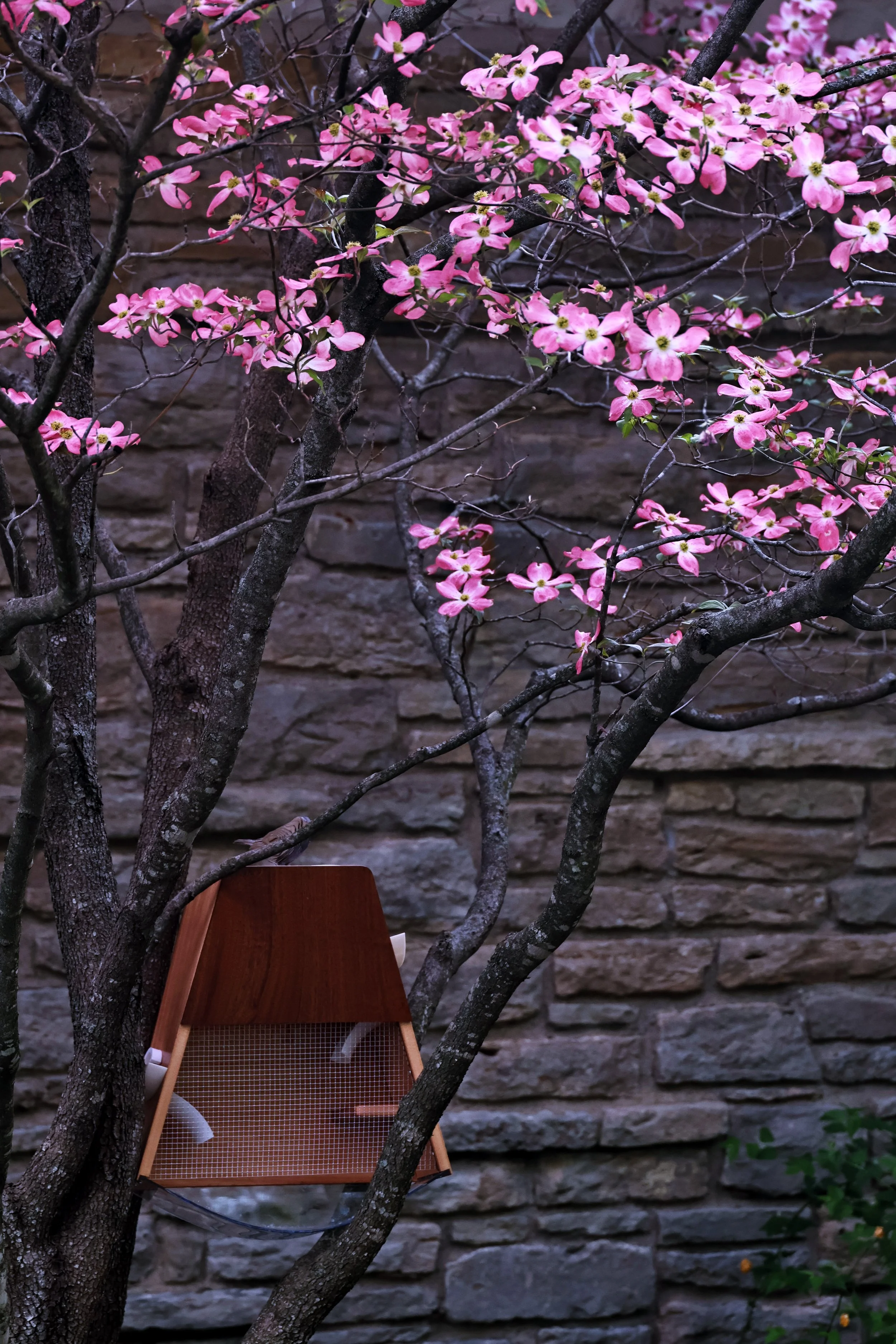
Details

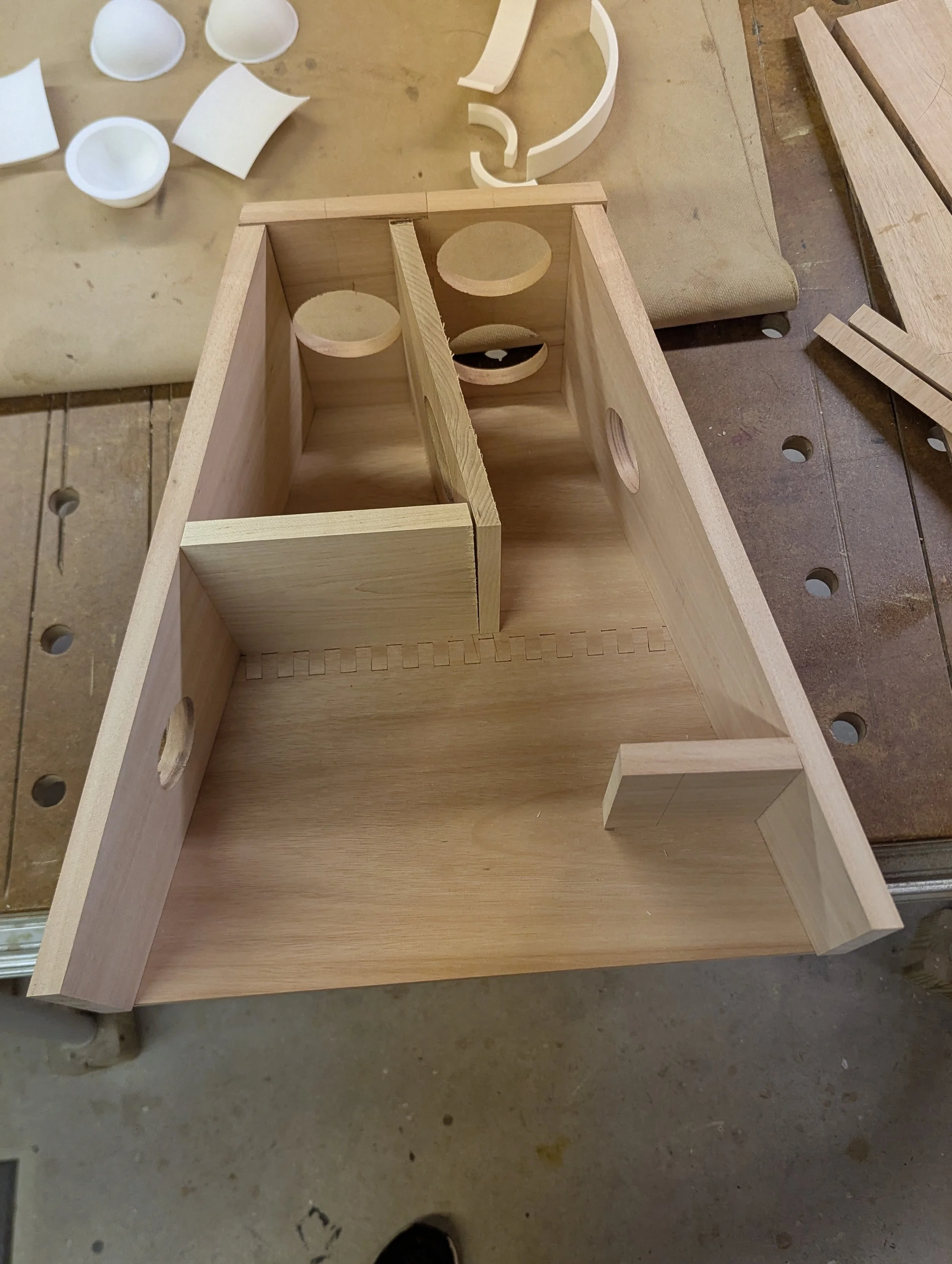
Frame assembly
Used box joints to add flair to the design; predominantly used the table saw and drill press
FINAL MODEL CONSTRUCTION
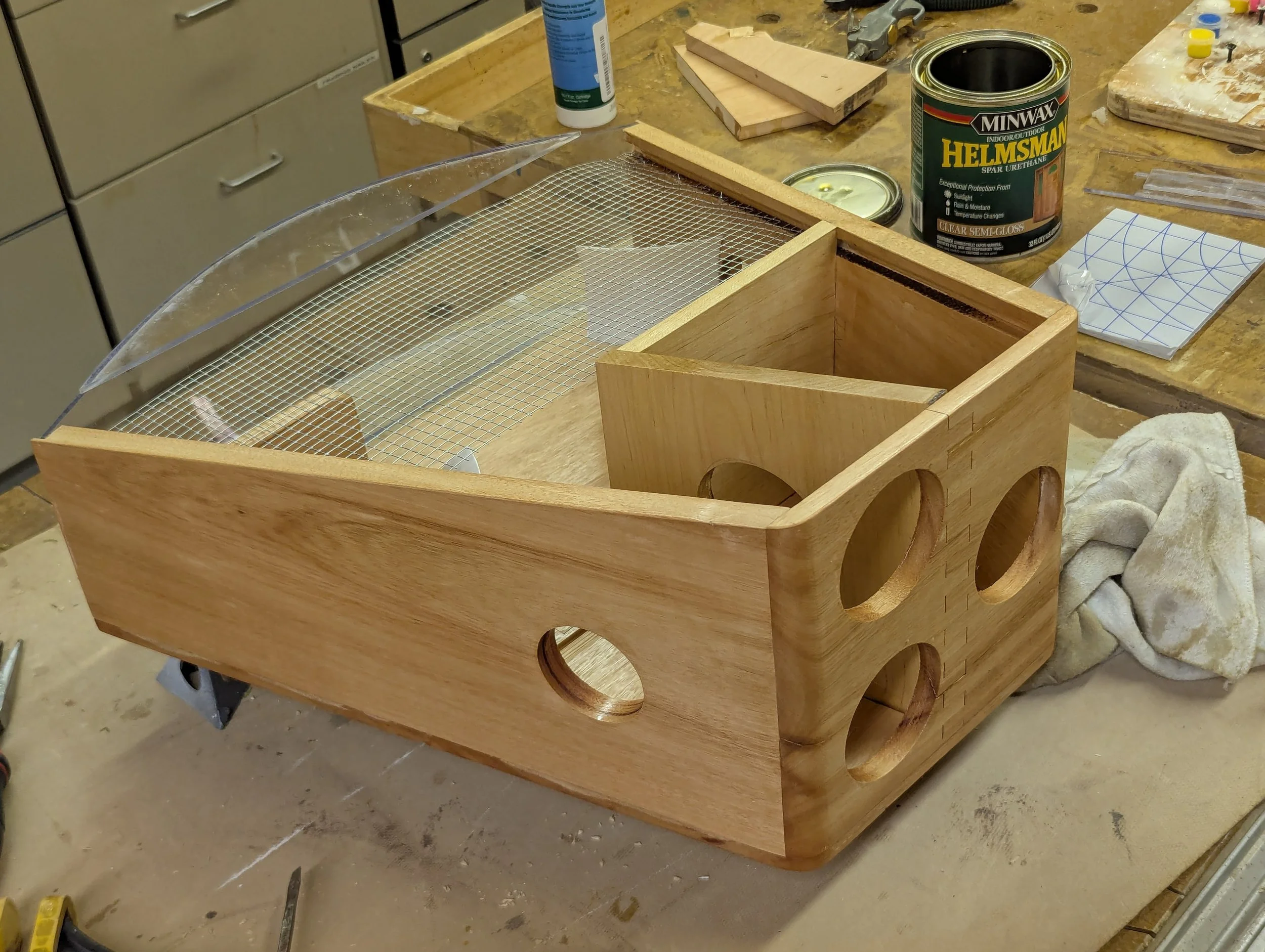
Outdoor waterproof coating added to the entire wood frame.
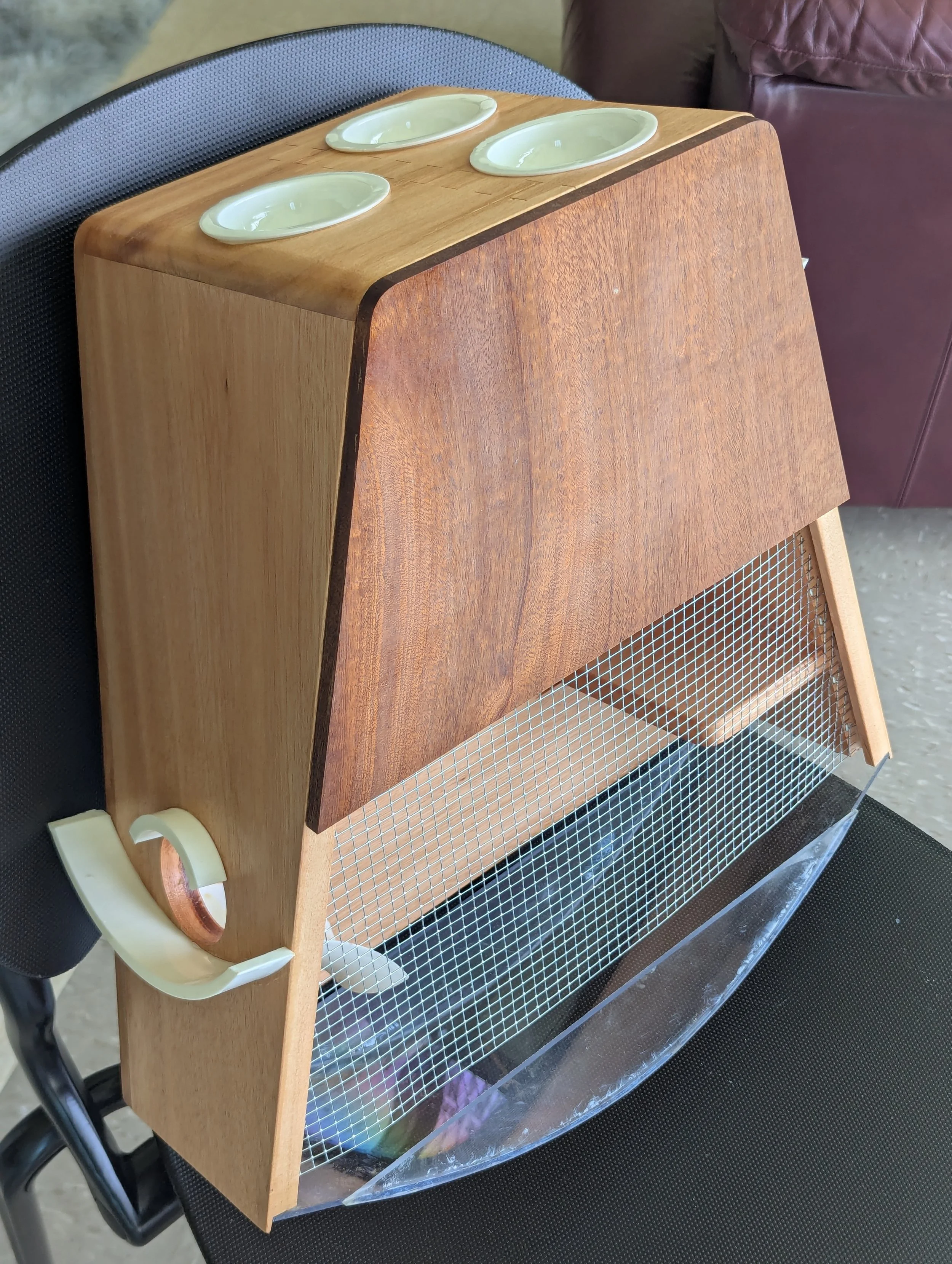

Front plate added to cover nesting area.
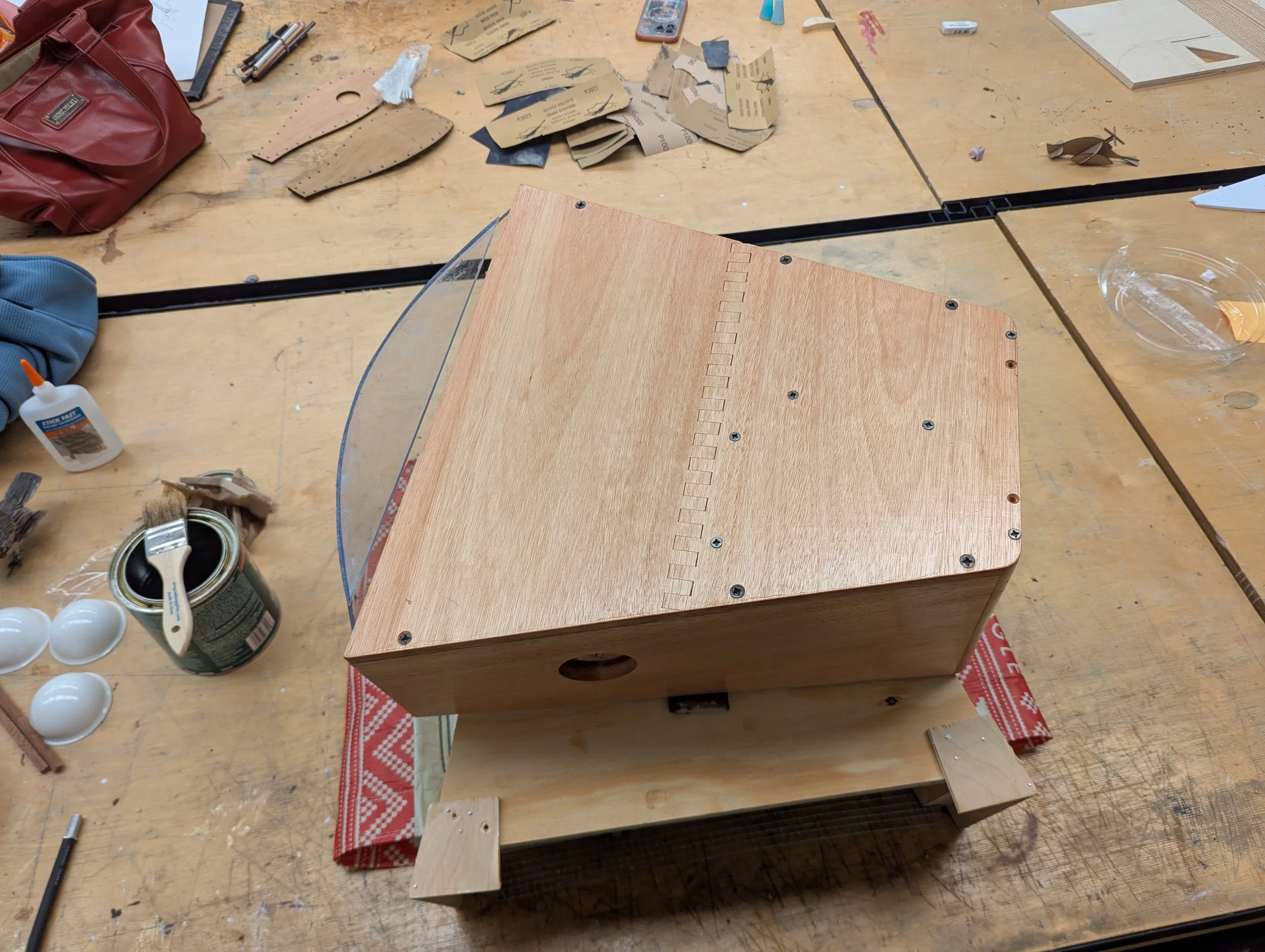
Screws added for security
Final additions: 3D-printed bowls to catch rainwater (epoxy-coated) & rain-catchers at each entrance
Further explanation of functionality:
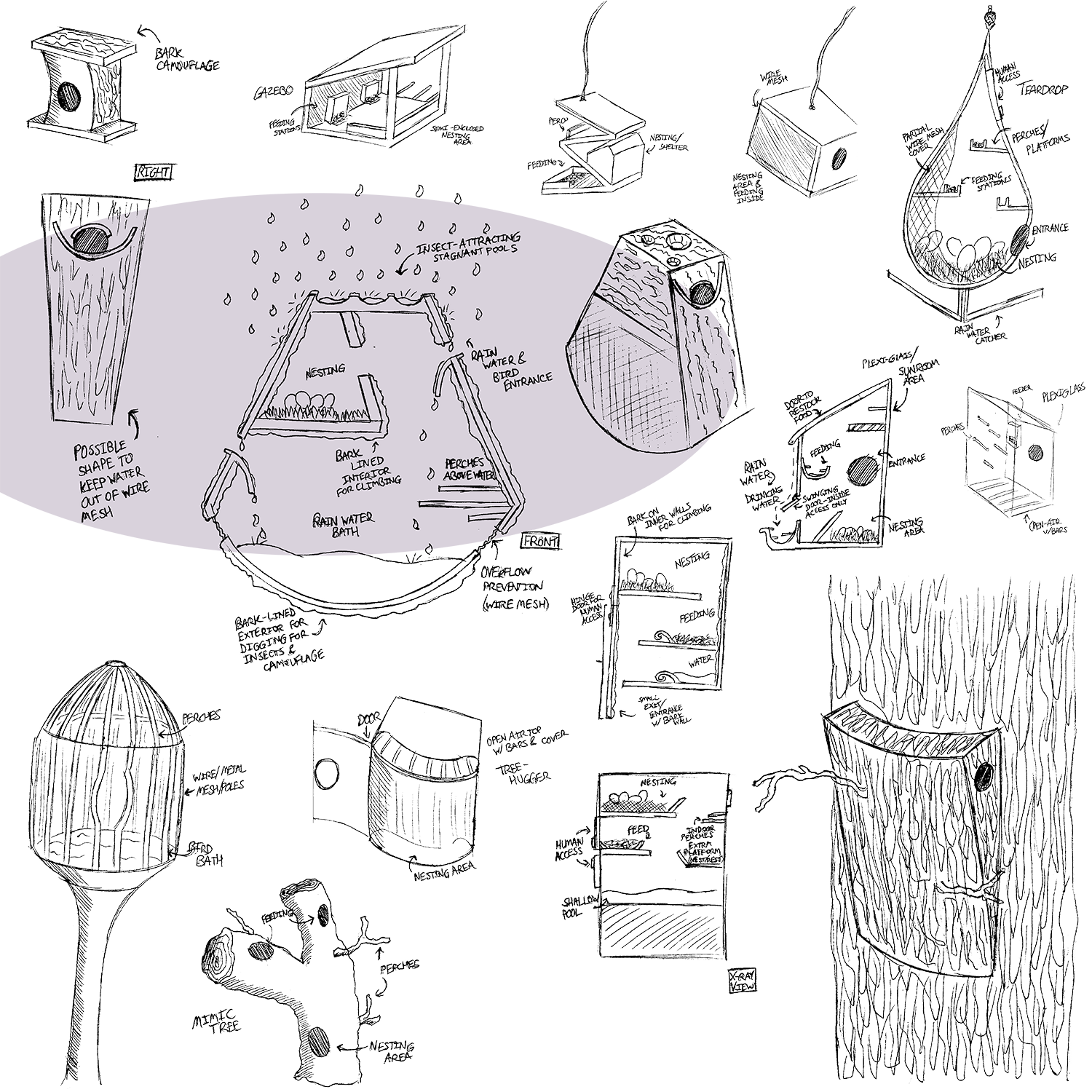
- bowls catch water and create stagnant pools to attract insects (critical food source)
- rainwater system collects water via rain catchers, the water is funneled through the slides and into the pool
- the Avian Sanctuary is meant to be hands-off for humans, so the pool will refresh with clean water with rain, overflowing out of the front