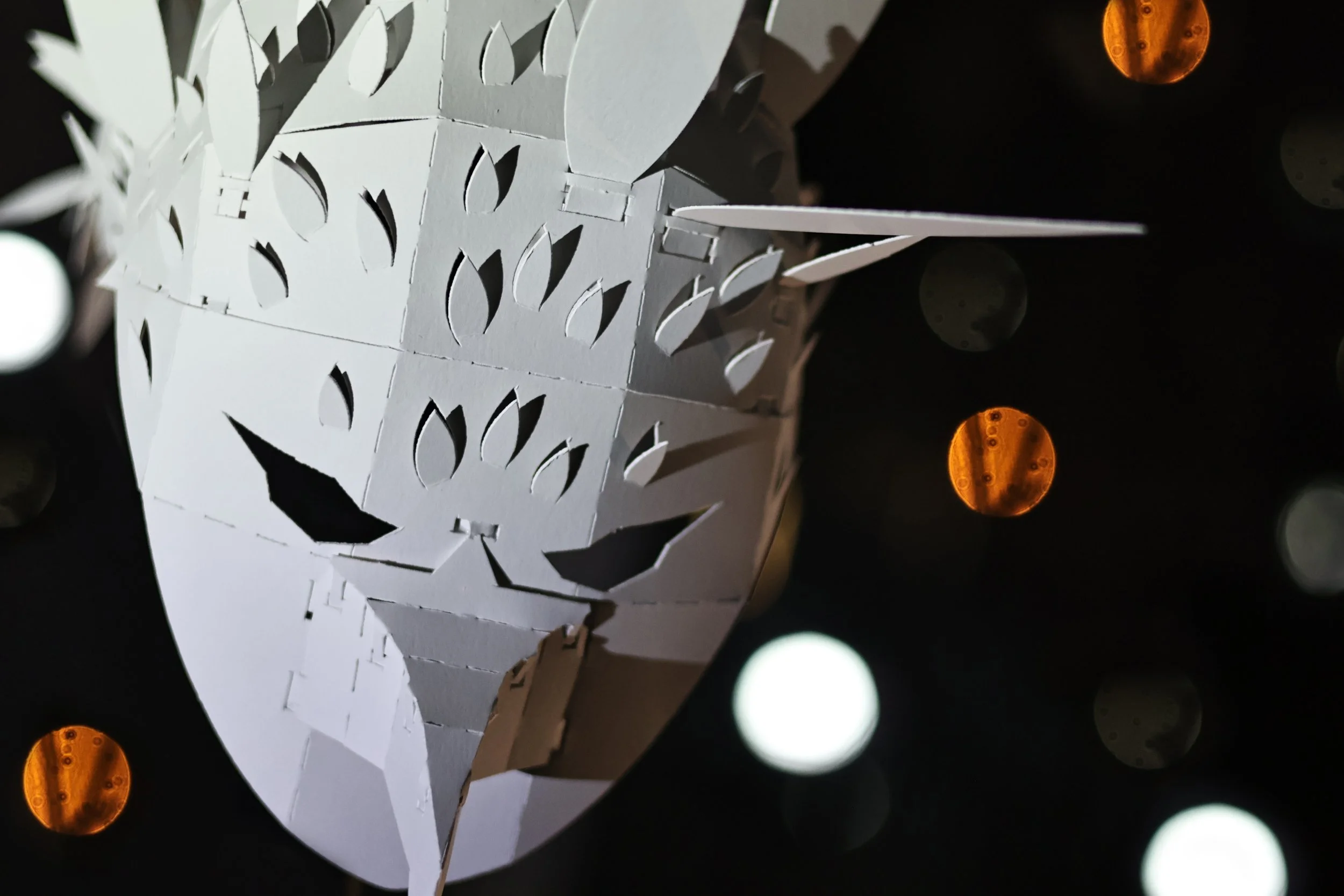
Harpy
January-February 2025
Duration: 4 weeks
Project Description:
Create a mask using one sheet of 19” x 24” Bristol paper—no adhesives or other materials. Additionally, create a set of instructions that will be followed by a peer in an attempt to construct the mask. The mask should be a representation of an animal or mythological creature. I chose a harpy eagle.
Iterations: 12
Number of creases: 260
Hours spent: 44
IDEATION

EARLY PROTOTYPES
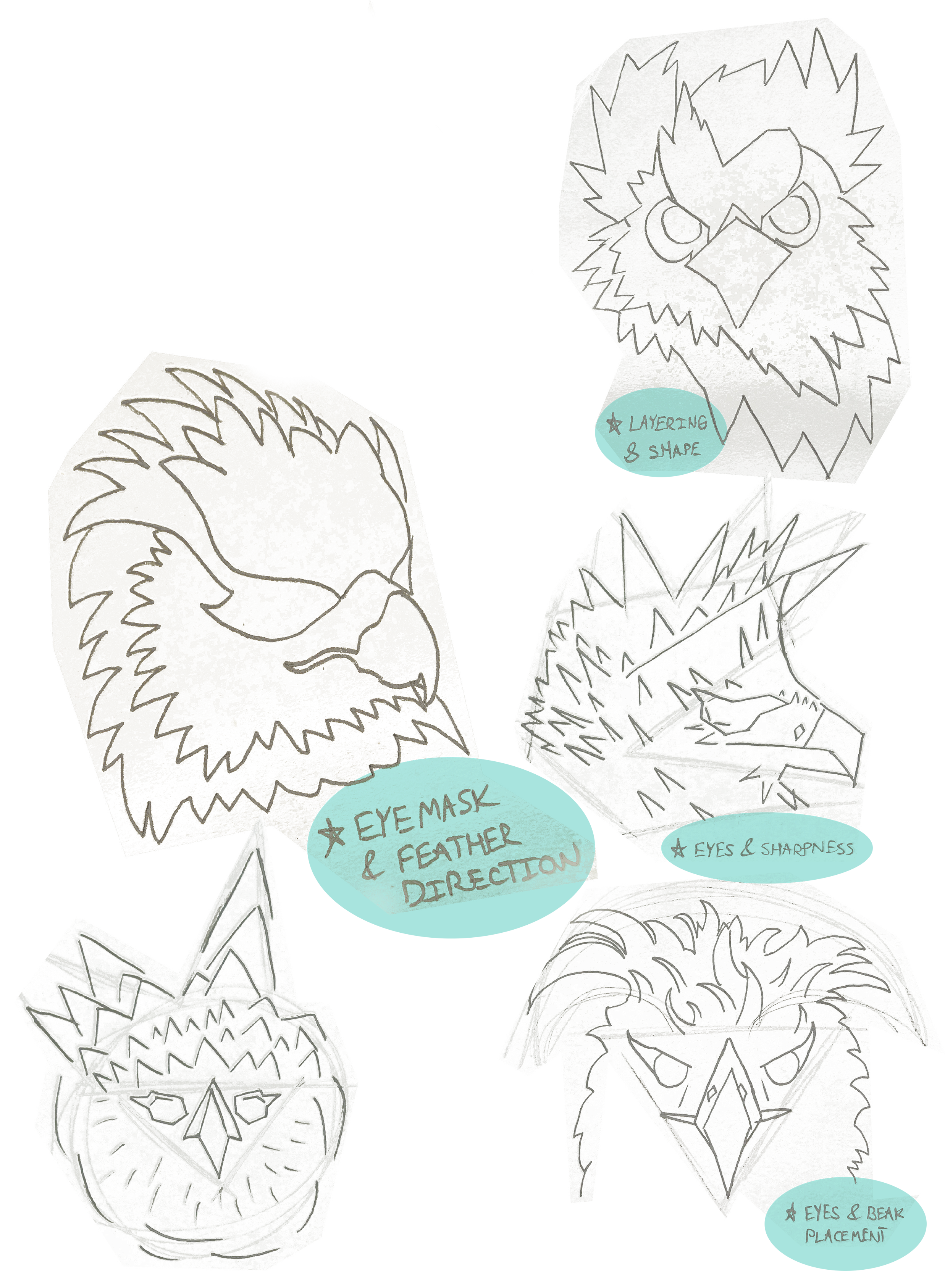
After settling on the harpy eagle as my animal, I did some research (mainly visual) before moving into sketching. I focused on proportions (beak, eyes, etc.) and feather shape and formation.
As for the sketches, the callouts describe the details of each drawing that worked the best.


Left: first helmet- inspired design, mostly round components
Right: mini helmet that paved the way for the rest of the project, as well as my first square- based design

PROTOTYPES


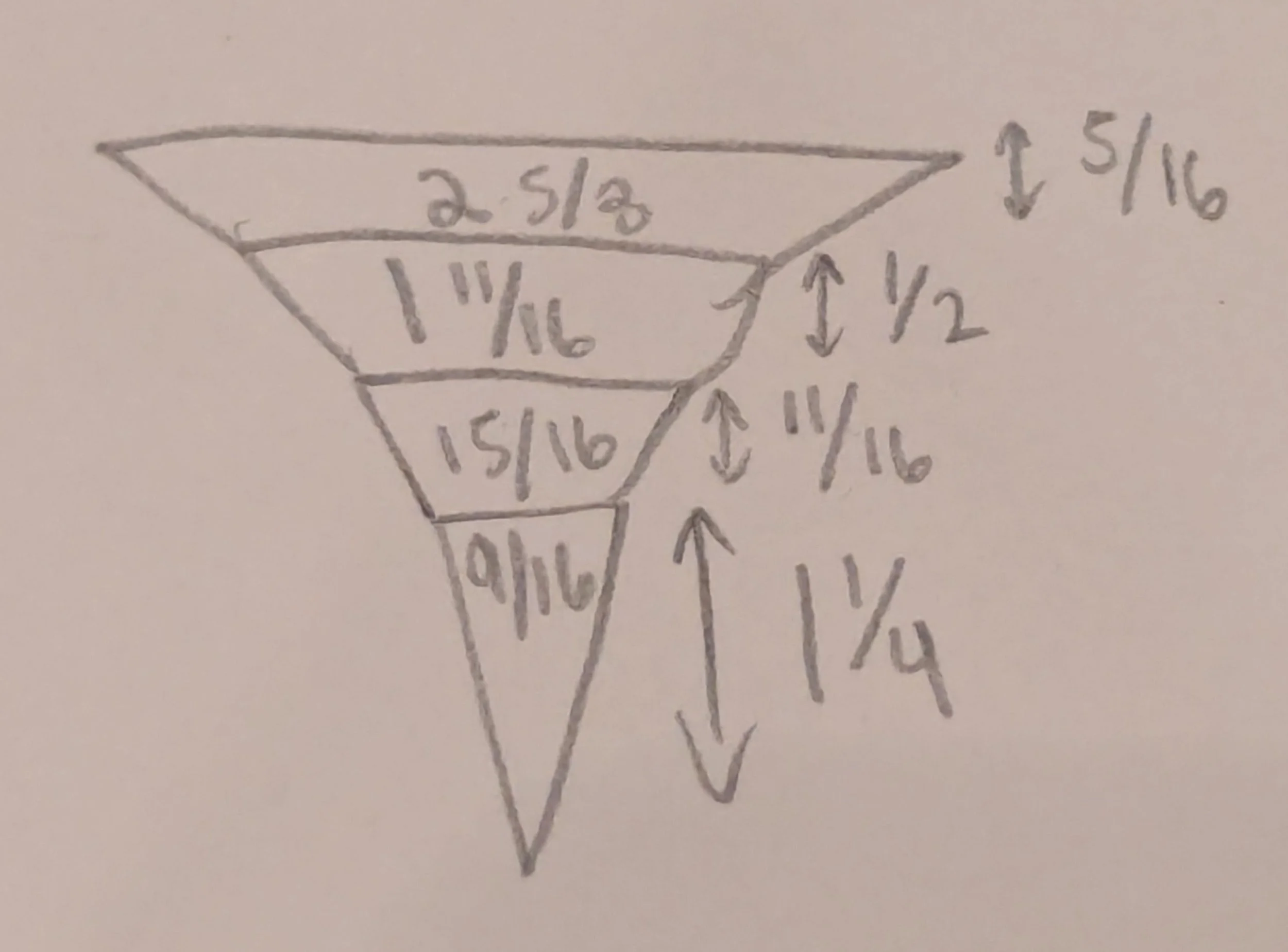
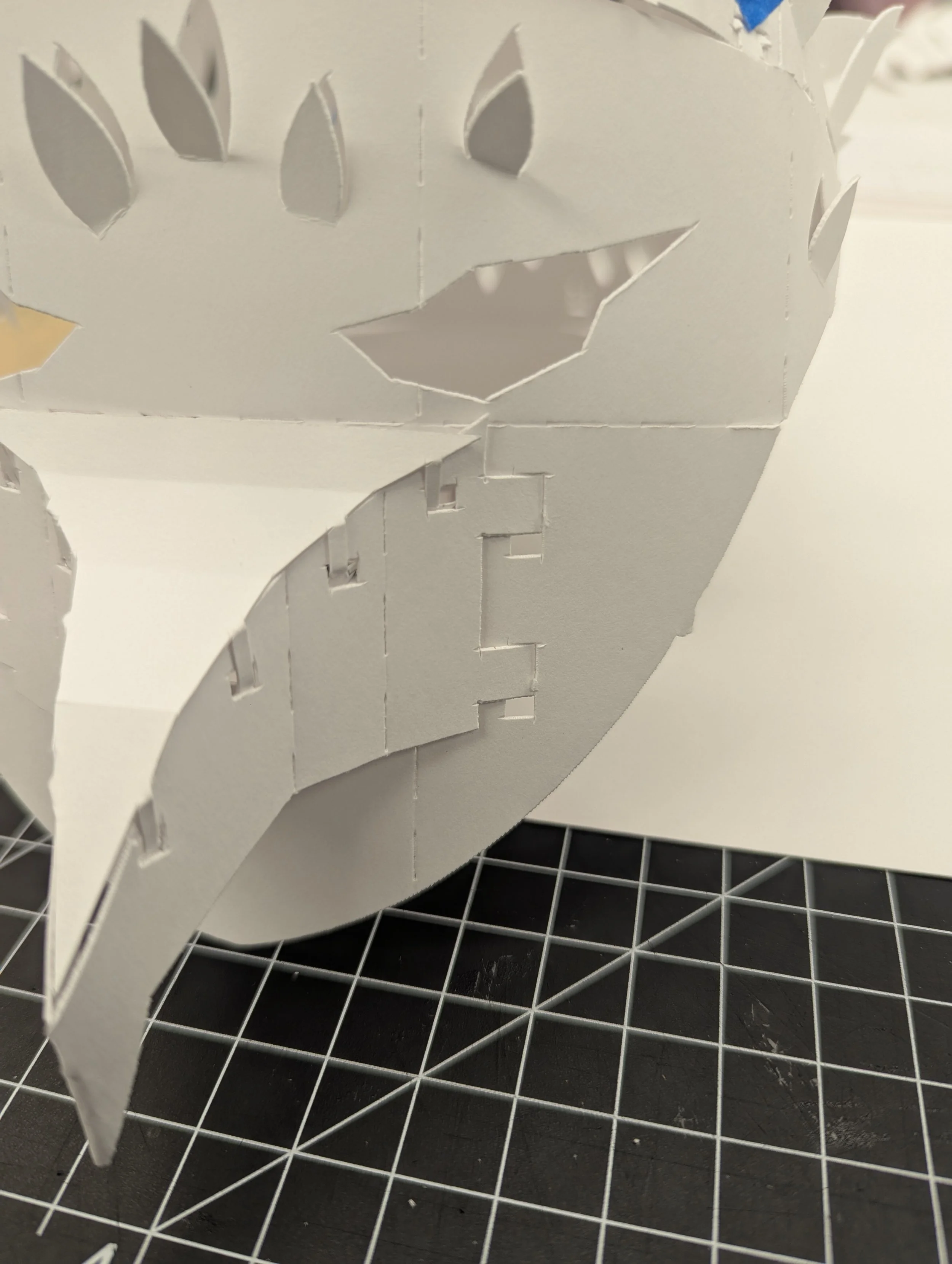
Main improvement from past iterations: the beak
Created a smoother transition into the face of the mask and perfected the size
Cut intricate tabs into the beak design as joinery

Next step: instructions page
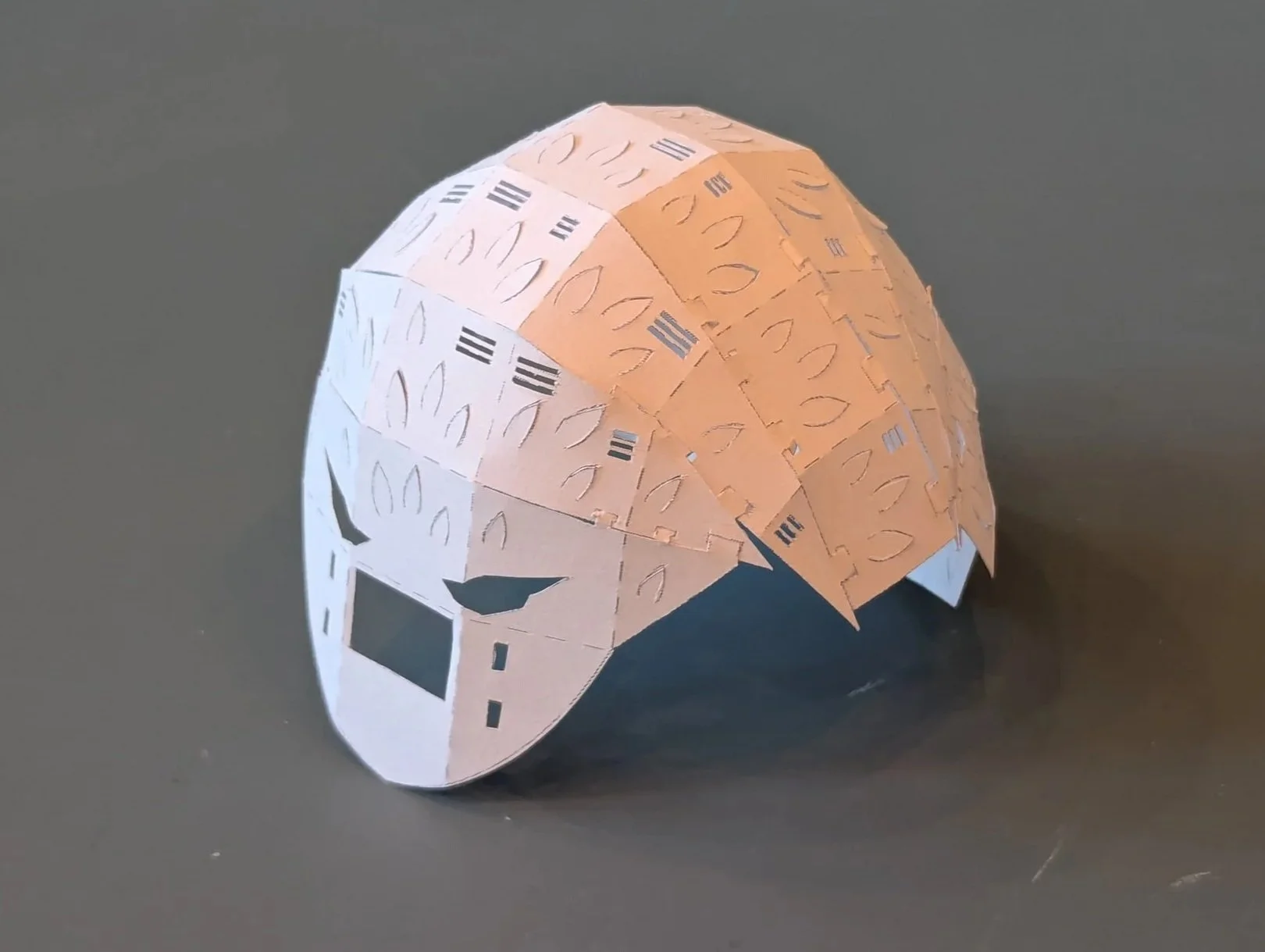
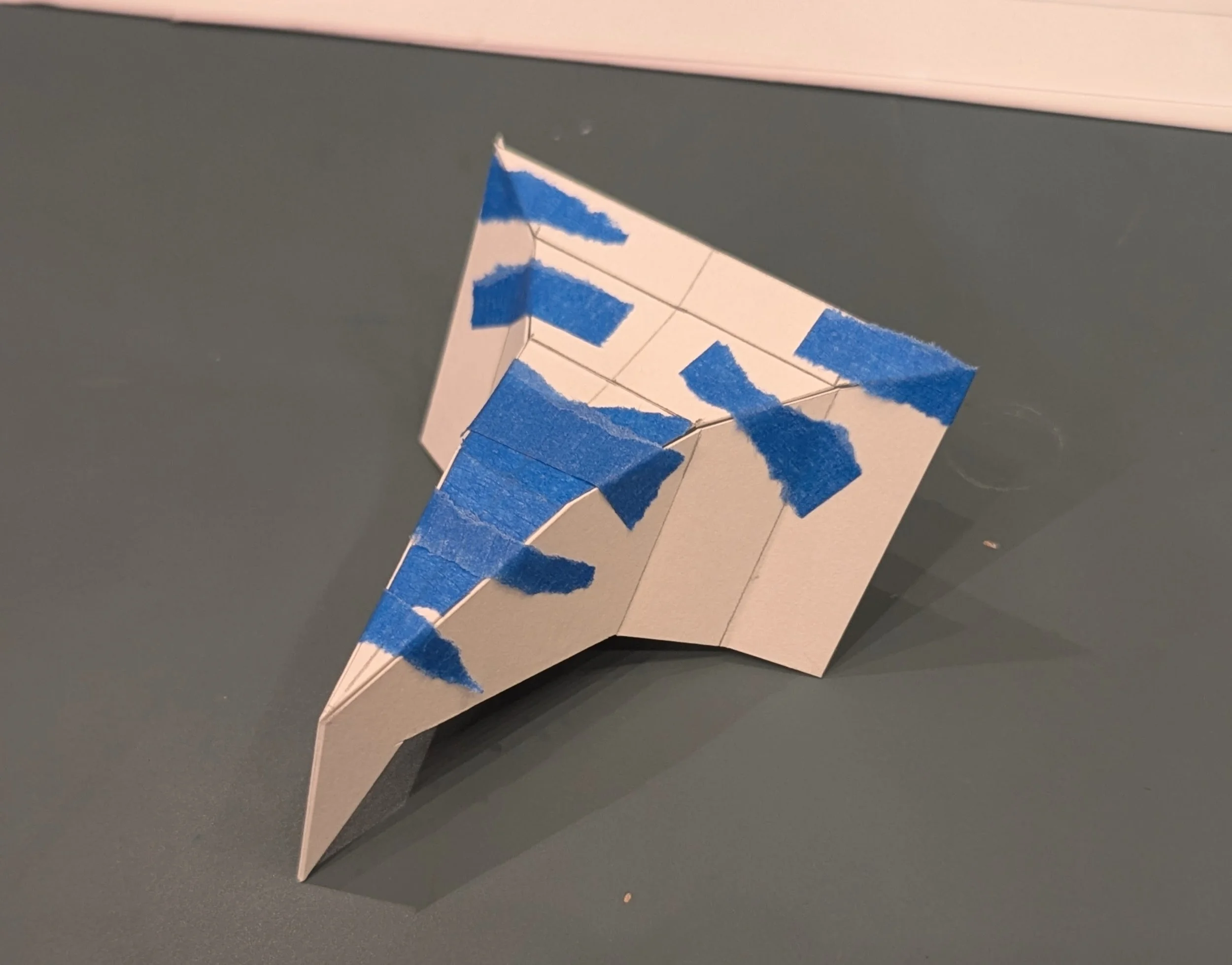
Before creating the instructions, I created a miniature version of my mask from a piece of printer paper so that I could document the process more effectively
FINALS
Masquerade-esque design with clear flaws (flat design, didn’t stay on head, basic geometry)
Led to the shift towards a helmet-esque design, which would be consistent

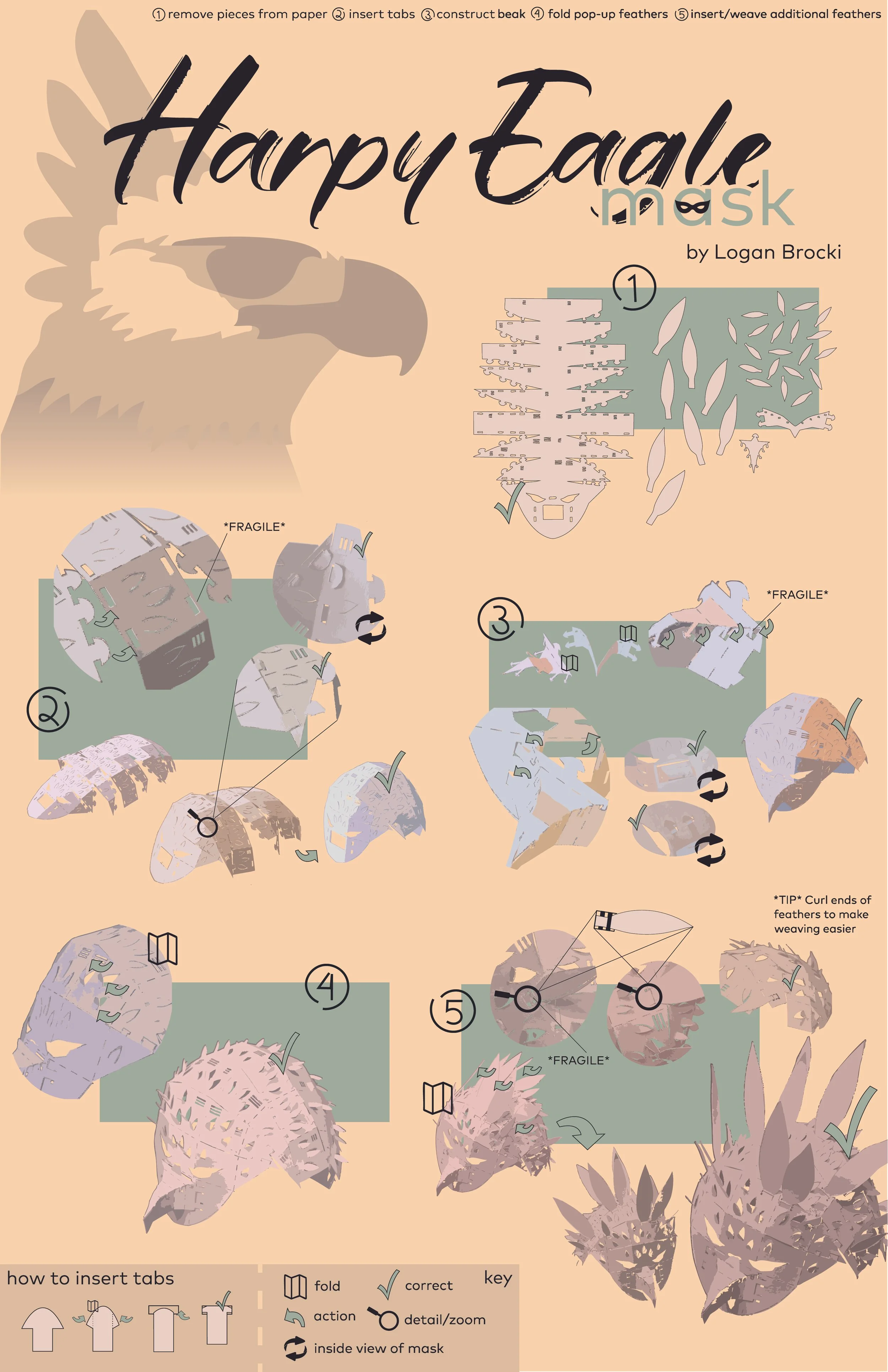
The final instructions (which were followed by a peer who created a successful mask).
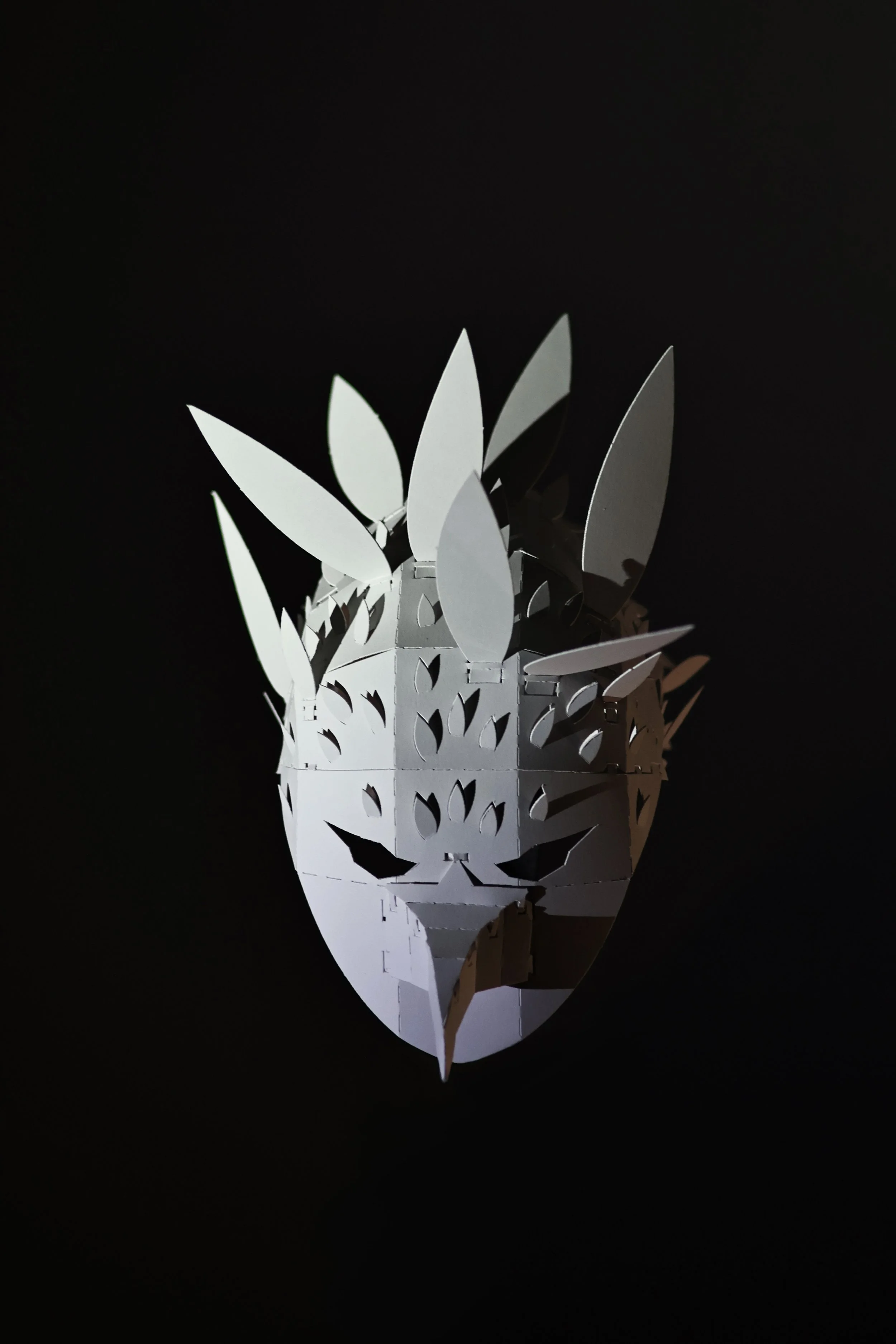


The next iterations were focused on finding the perfect fit, sizing and shaping the beak, and choosing the feather design


FINAL DESIGN



INSTRUCTIONS